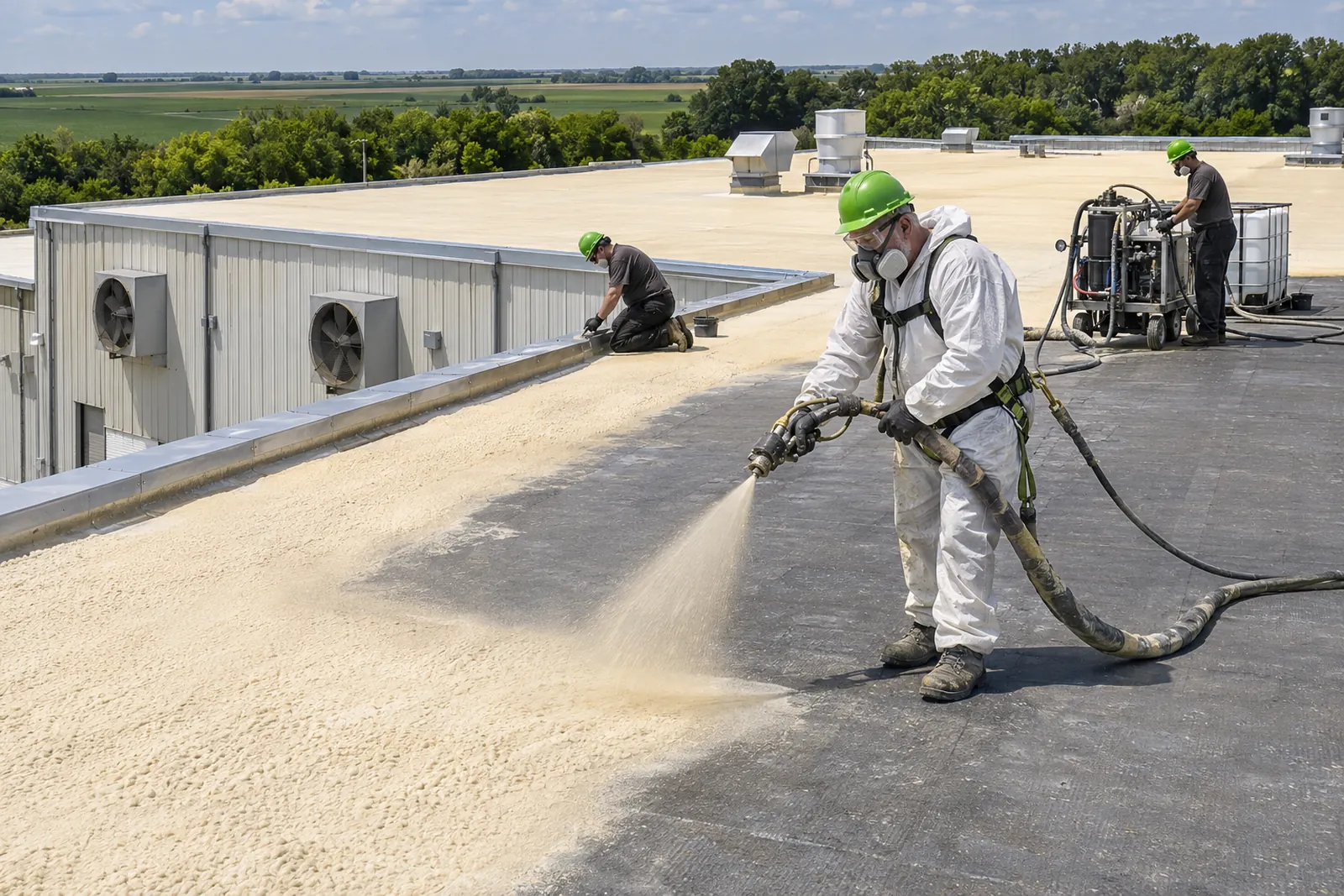
Spray Foam
- What Goes On
- Foam layer plus a protective topcoat
- Insulation
- Adds R-value above the roof deck
- Drainage
- Foam can be built up to slope water off
- Screws and Laps
- Buried under one continuous layer
- Upkeep
- Topcoat checked and recoated over time
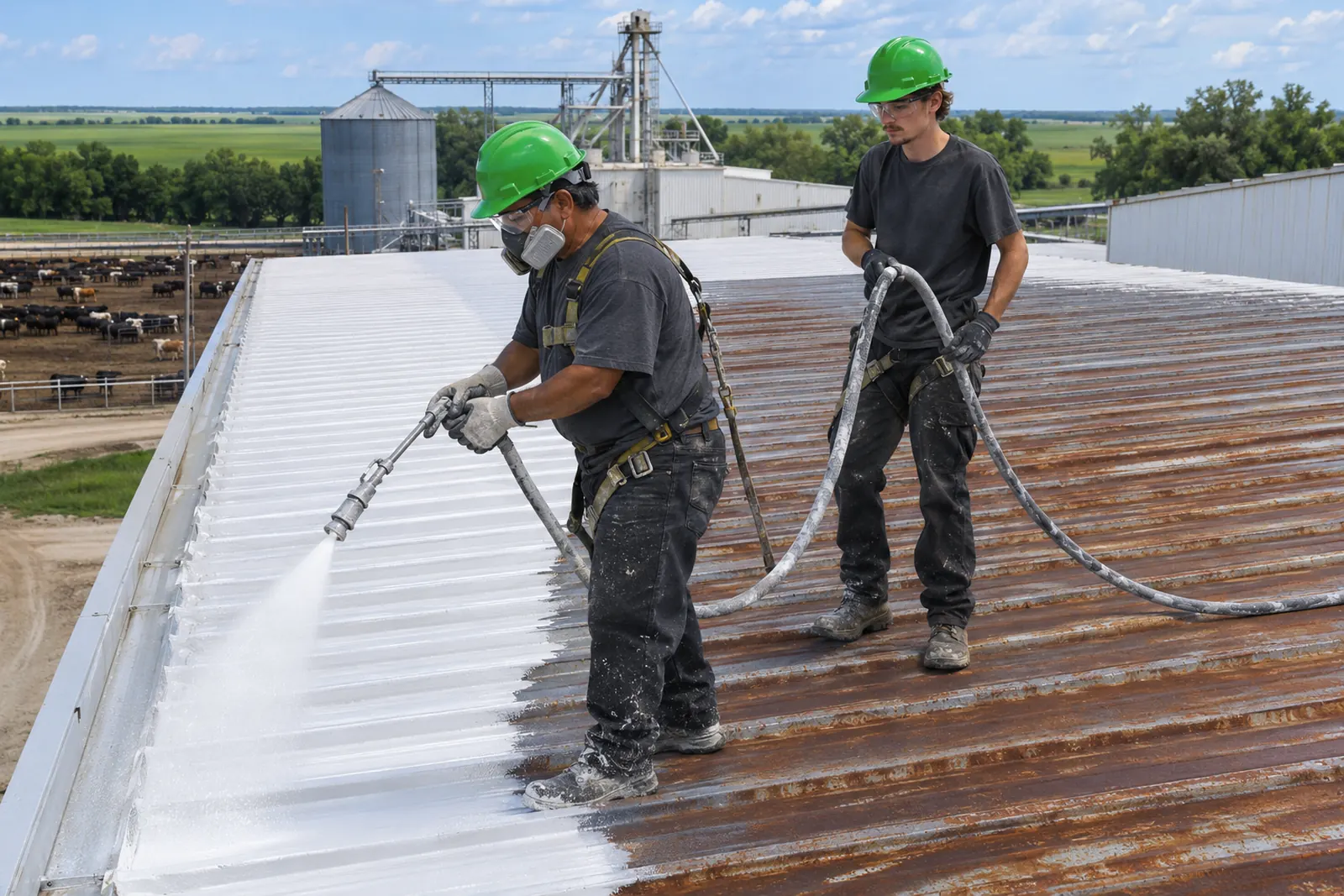
As a Kearney spray foam roofing contractor, we spray foam over metal and built-up roofs, then cover it with a protective coating against sun and hail.

One continuous layer over screws
Adds insulation above the deck
Protective topcoat over foam
Spray days planned around wind
Fit Check
Kearney spray foam roofing makes sense when a roof needs insulation as well as waterproofing. Compare it with a plain coating before deciding.
Roof Conditions
Spray foam covers problems that a thinner coating can only seal. These are the roofs where it earns its cost.
Metal shops with thin or missing insulation lose heat through the panels all winter. Foam on top adds insulation without touching the inside.
Warm air inside a cold metal building condenses on the underside of the panels. Insulating the roof from above warms the steel and cuts that drip.
Large metal roofs carry so many fasteners that sealing them one by one takes days. Foam buries every screw in one pass.
Built-up and flat roof areas that hold water can be foamed thicker at low points to push water toward drains.
Gravel and asphalt roofs on older buildings blister and crack. Once loose gravel and wet areas are removed, foam goes on over the firm parts.
Coating Options
Foam work around Kearney falls into three kinds of job, each with its own prep.
Foam fills the panel ribs and covers screws and laps, then gets a silicone or acrylic topcoat. Rusted-through panels are repaired before spraying.
Loose gravel comes off, wet areas are cut out, and foam goes over the remaining firm surface with a protective topcoat.
Worn topcoats on existing foam roofs get cleaned, repaired at damaged spots, and recoated at the specified mils.
Benefits
Foam adds insulation and a continuous waterproof layer in one job.

The same foam layer that seals the roof also insulates it from above. Shops and storage buildings that ran cold in winter or hot in summer get a steadier inside temperature, and the panels stop sweating.
Insulating above the panels keeps the steel warmer in winter, so less moisture forms and drips onto stock or equipment.
The topcoat takes the sun and hail. When it wears thin, it gets recoated while the foam underneath stays.
One continuous layer covers every fastener in a single pass, which saves days on very large roofs.
Call and describe when the drips show up. Condensation and roof leaks look alike from below, and each needs a different fix.
Process
Foam goes on fast, but the prep and the topcoat decide how well it lasts.

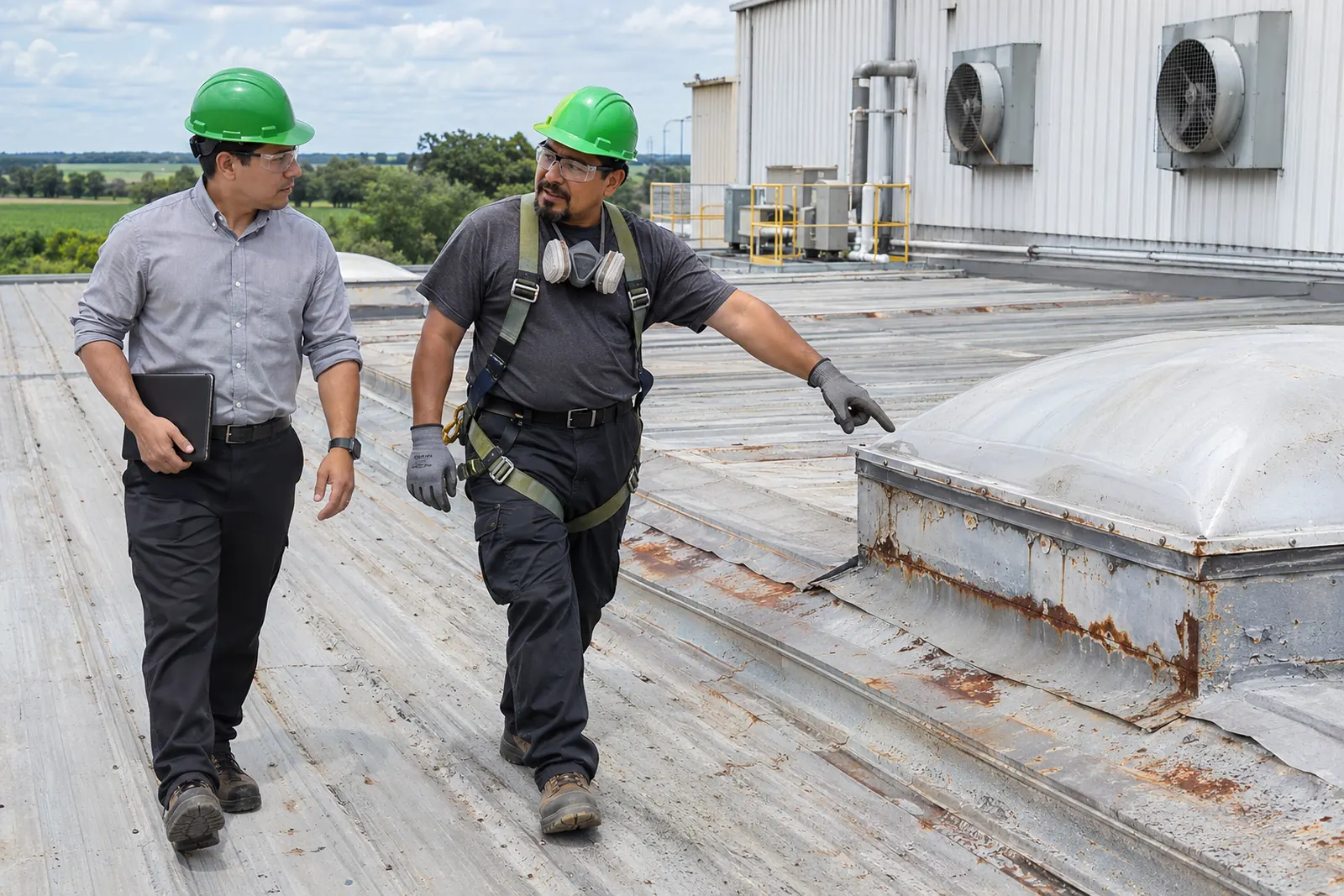
We probe for wet insulation, mark rusted-through panels, and check the deck. Wet material and failed panels are dealt with before any foam goes on.
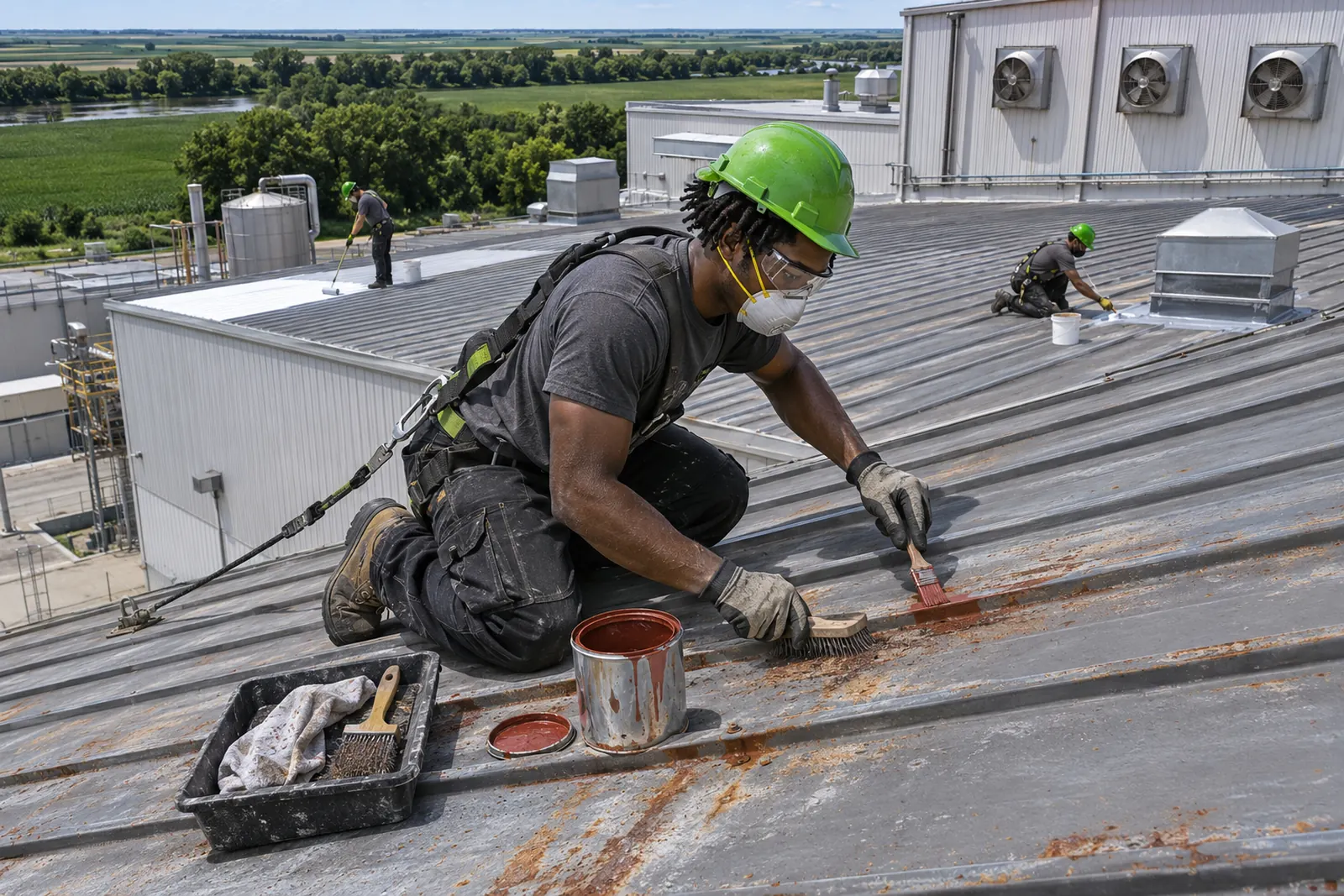
Panels or built-up surfaces are cleaned, loose gravel is removed, and rust is treated so the foam bonds to firm, dry material.
Rooftop intakes, vehicles, and nearby surfaces are covered or scheduled around, and spray days are set for low wind to control overspray.
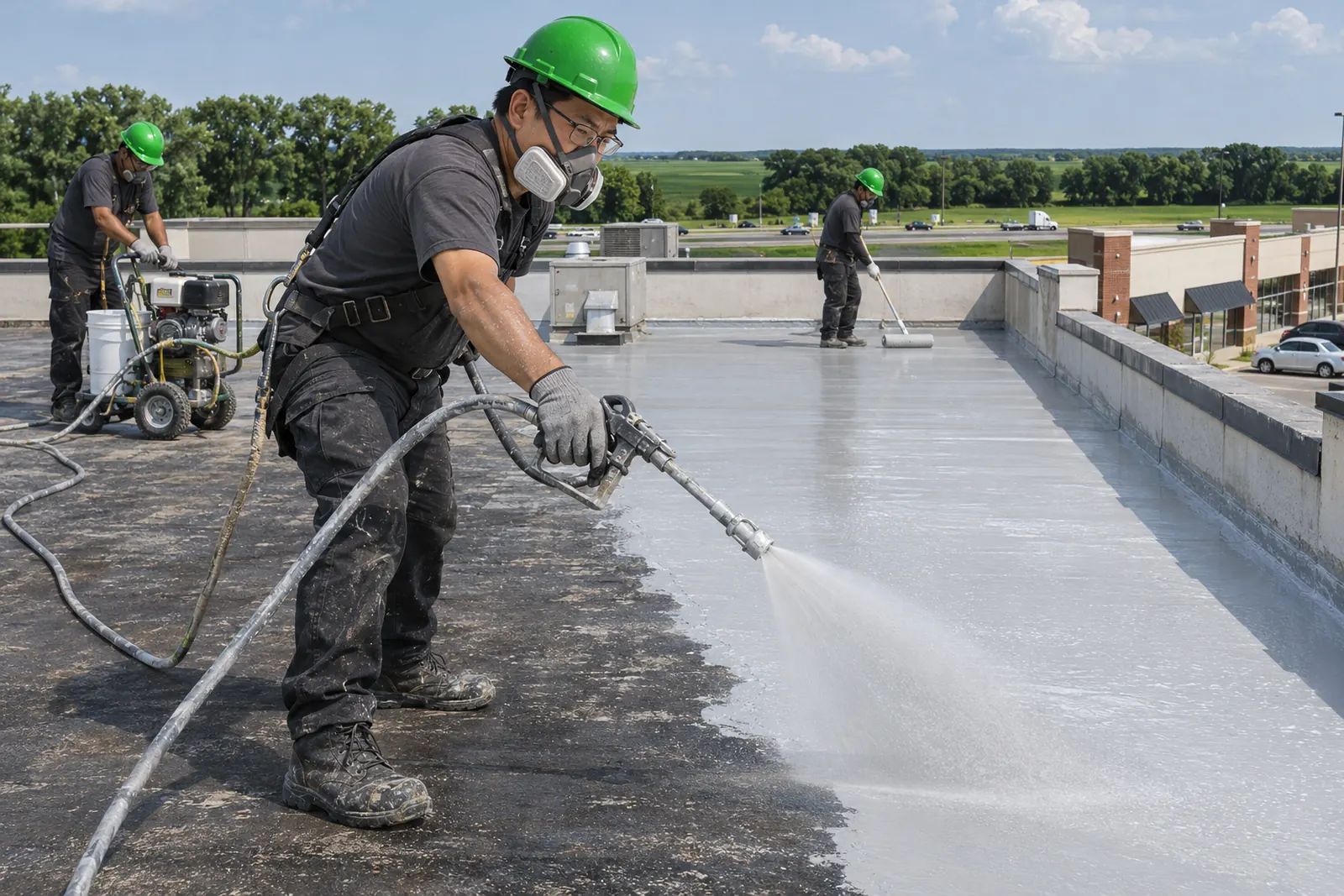
Foam is sprayed in passes to the planned thickness, building up low areas so water moves toward drains and gutters.
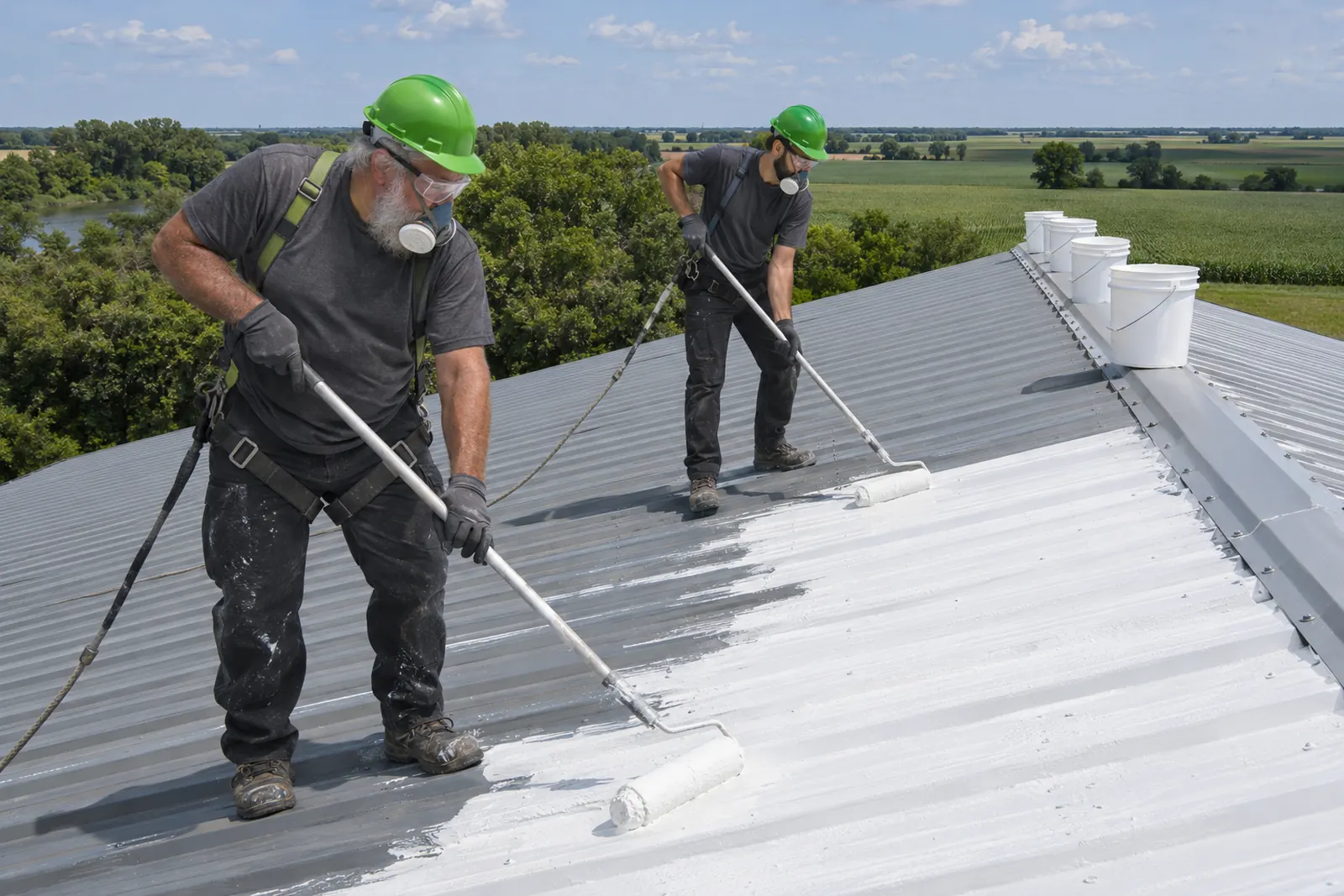
A silicone or acrylic topcoat goes over the foam at the specified mils, shielding it from sunlight, hail, and foot traffic.
Related Services
Foam always gets a coating on top, and some buildings need coating alone on other sections.

Seals and coats steel panels when the building already has enough insulation.
Commercial Metal Roof Coating in KearneyOften used as the topcoat over new foam, and as the recoat when it wears.
Silicone Roof Coating in Kearney
Another topcoat choice for foam on roofs that drain well.
Acrylic Roof Coating in KearneyQuestions
What owners ask about foam over metal and built-up roofs around Kearney.
In most cases, yes. Foam bonds over seams, laps, and screws as one continuous layer, and a coating on top protects it from sun and weather. Rusted-through panels and damaged framing are repaired first, and wet insulation under the panels is removed before spraying.
Three things set it: foam thickness, the topcoat chosen, and how much prep the roof needs. Thicker foam adds insulation and material. Rust treatment, fastener work, and wind delays on spray days add labor. We give a number after measuring the roof, and a full replacement plans at about $5 to $8 per square foot for comparison.
A foam roof lasts as long as its protective topcoat stays intact, because exposed foam breaks down in sunlight. Manufacturers commonly plan recoats every 10 to 20 years, set by coating thickness. Hail dents, birds pecking at the foam, and foot traffic should be patched quickly to keep moisture out.
Once the topcoat has worn thin, shows bare foam, or carries many hail bruises. We measure coating thickness and look for chalking, cracks, and blisters. A recoat means cleaning, repairing damaged foam spots, and applying new coating at the specified mils. Catching the wear early keeps the job a recoat.
Nebraska statute 71-6406 makes the state building code the default where a local code has not been updated, and that default does not apply to construction on a farm or for farm purposes. A farm building near Kearney can still fall under a local code, so we check with the local office before foaming or coating one.
Next Step
Get a planning range online, or call to talk about insulation and leaks on your roof.