Drains Well
Acrylic Fits
- Slope
- Pitched panels that shed water in minutes
- Gutters
- Clear and draining after storms
- Surface
- Primed metal or earlier acrylic
- Schedule
- A warm, dry stretch for curing
- Recoat
- Acrylic again after cleaning

As a Kearney acrylic roof coating contractor, we prime and coat sloped metal roofs that shed water, scheduling each job for warm, dry weather.
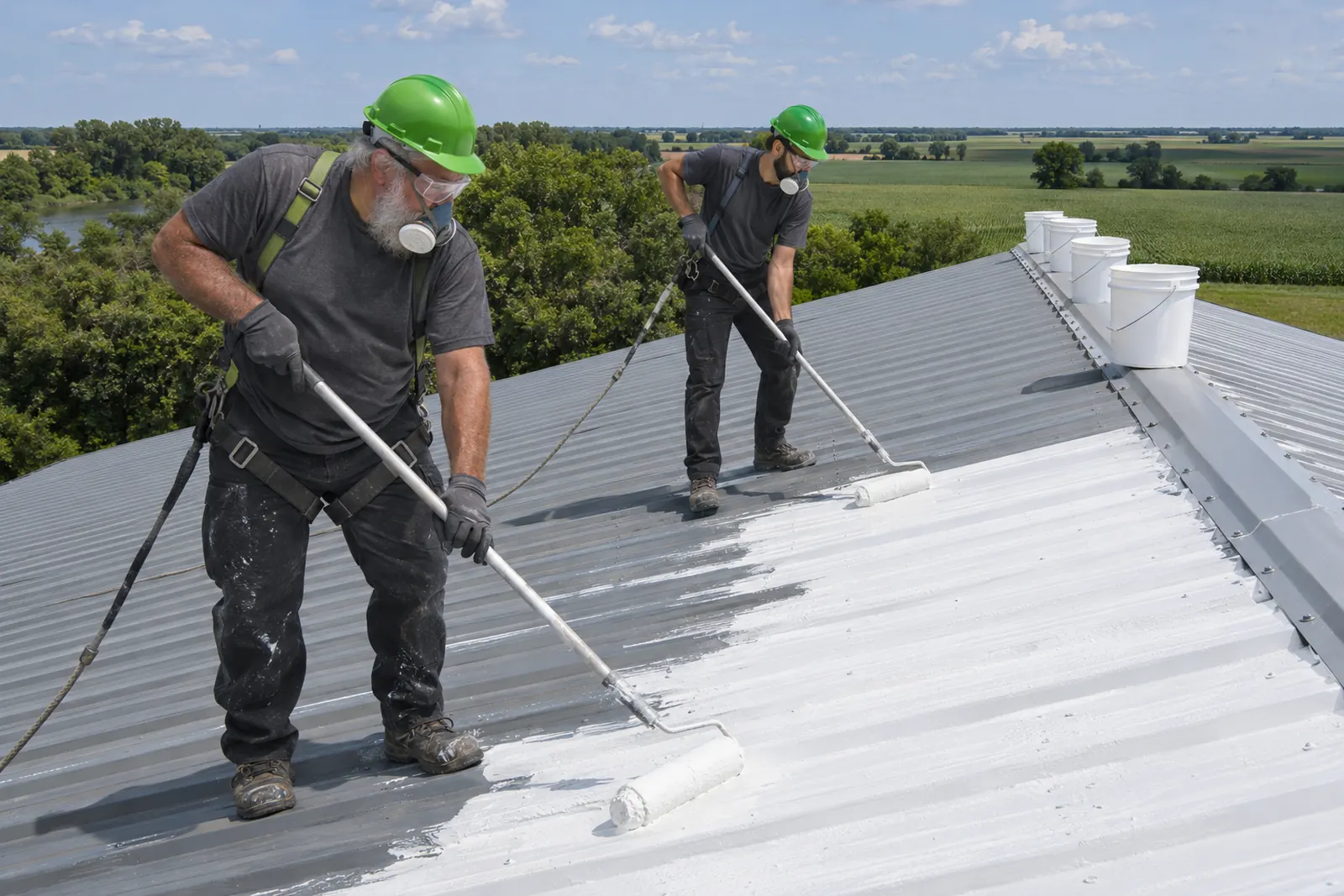
Bright, reflective white finish
Scheduled for warm, dry days
Made for sloped, draining panels
Recoats with acrylic later
Fit Check
Kearney acrylic roof coating suits panels that drain fast. The cards compare a roof that fits acrylic with one that should get silicone instead.
Roof Conditions
Acrylic fits the wear patterns of a sloped metal roof. These are the conditions it covers best.
Factory paint on older panels chalks and fades until bare galvanizing shows through. Acrylic restores a bright surface over primed steel.
Screws on a sloped roof drip slowly rather than pour. Each one gets tightened, then sealed under acrylic.
Laps along the slope open as panels heat and cool. Acrylic with polyester fabric bridges those gaps.
Rust that sits on top of firm steel cleans up with a wire brush and takes primer and acrylic well.
Trim along the ridge and rakes loosens in wind. After refastening, acrylic seals the joints where trim meets panel.
Coating Options
Acrylic jobs around Kearney fall into three groups, set by what the roof already has on it.
Sloped steel panels get primer, sealed screws, and two or more acrylic coats. It is the most common acrylic job around Kearney.
A worn acrylic roof gets cleaned, spot-repaired, and recoated with acrylic, keeping the old coating as the base layer.
Buildings with a draining field and a few ponding gutters get acrylic on the slopes and silicone in the low runs.
Benefits
Acrylic gives sloped metal roofs a bright, reflective surface and an easy recoat path.
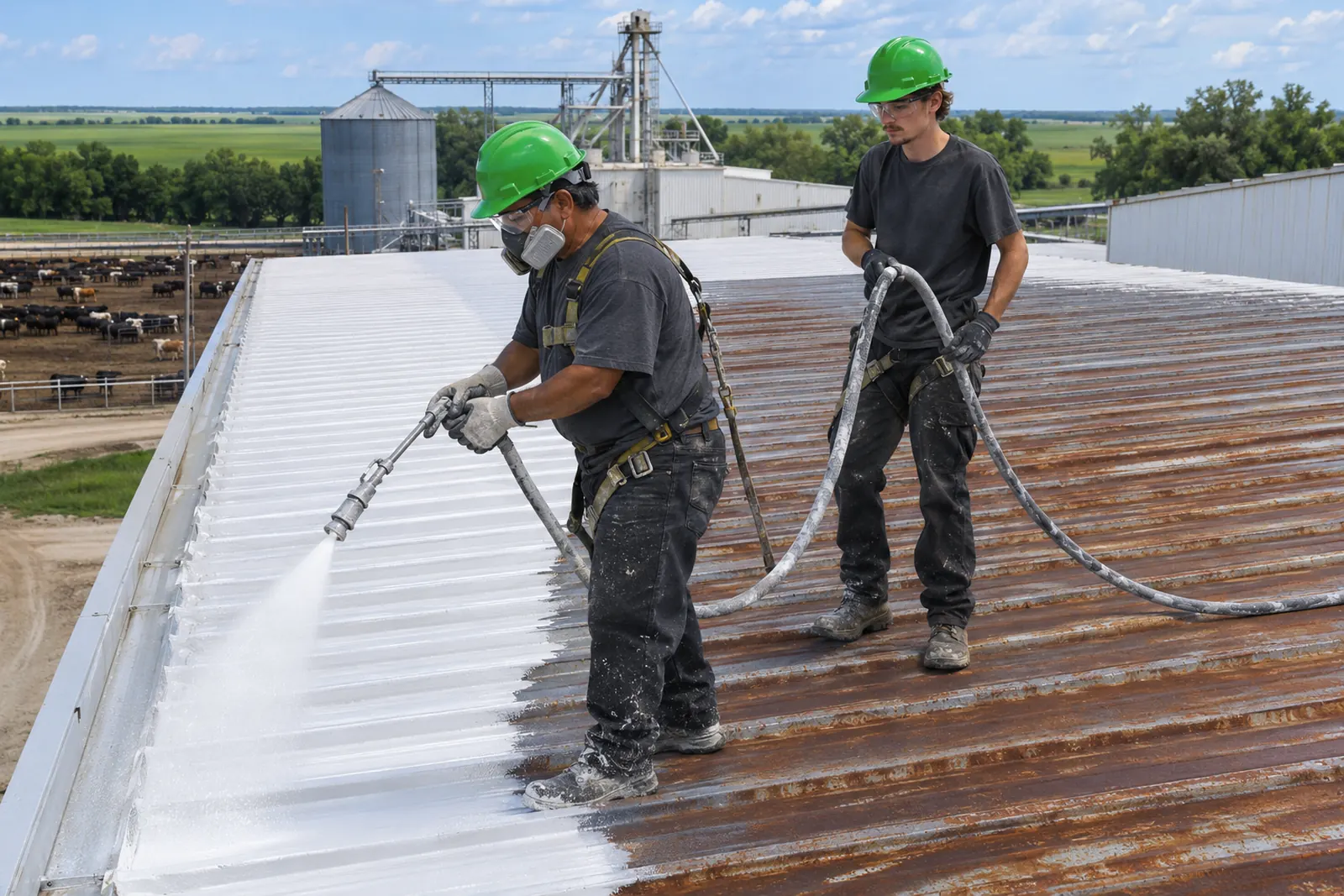
Acrylic bonds to acrylic, so the next coat needs only a cleaning and spot repairs before it goes on. Owners can plan future recoats as a maintenance line in the building budget.
White acrylic reflects summer sun off the panels, so storage areas and offices under the roof heat up less.
Water-based acrylic gives off little smell, which helps on clinics, offices, and shops that stay open while crews work above.
Acrylic material often costs less per gallon than silicone, which helps on large, well-drained roofs.
Call and tell us how the roof looks and how fast it drains. Faded, draining metal is where acrylic fits best.
Process
Acrylic needs the right weather as much as the right prep, so scheduling is part of the process.
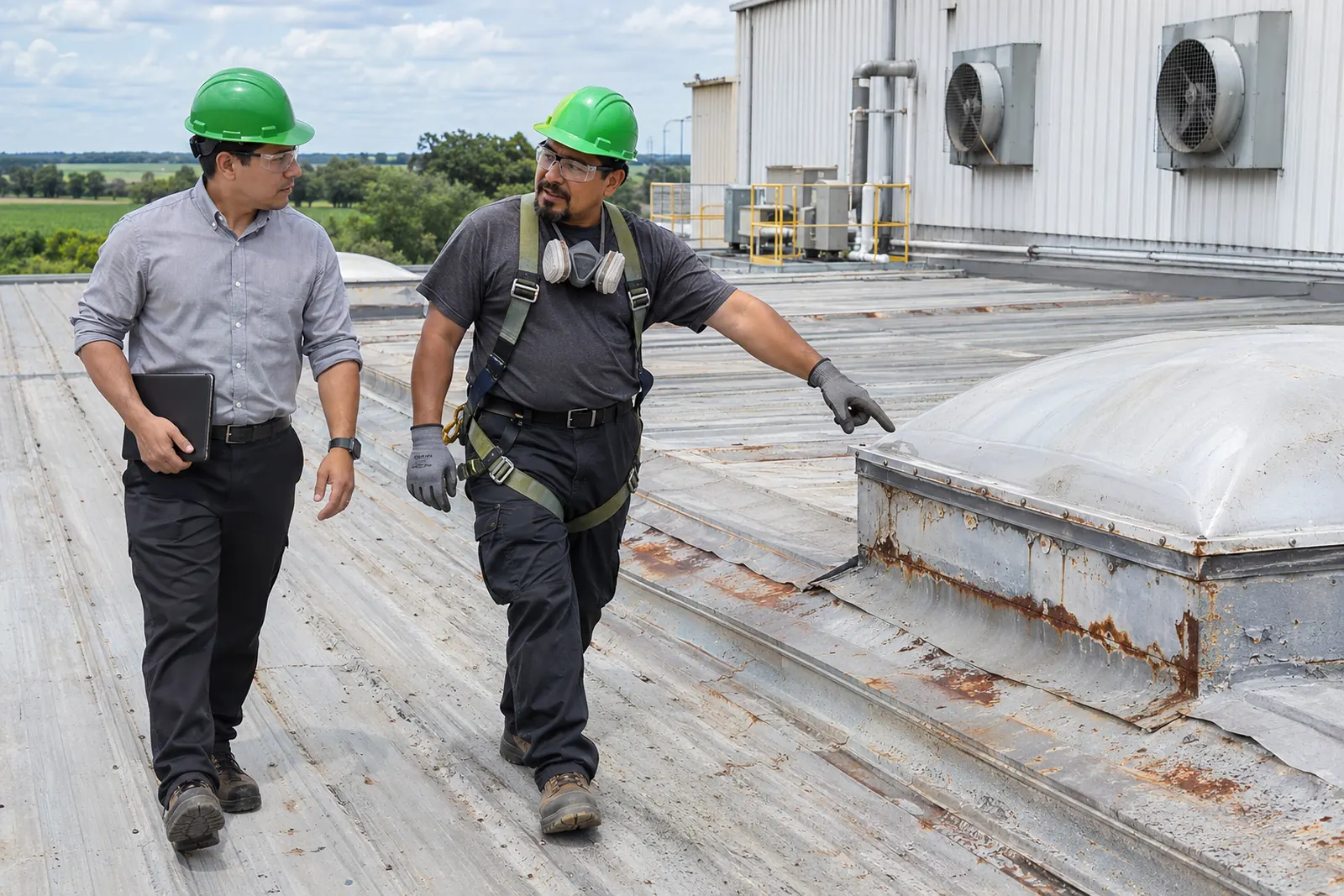
During the first visit we watch how each panel run drains and look for any spot where water lingers. Those spots decide whether part of the roof needs silicone instead.
Acrylic must cure before rain or freezing temperatures arrive, so spray days go on the calendar in the warmer, drier part of the year.
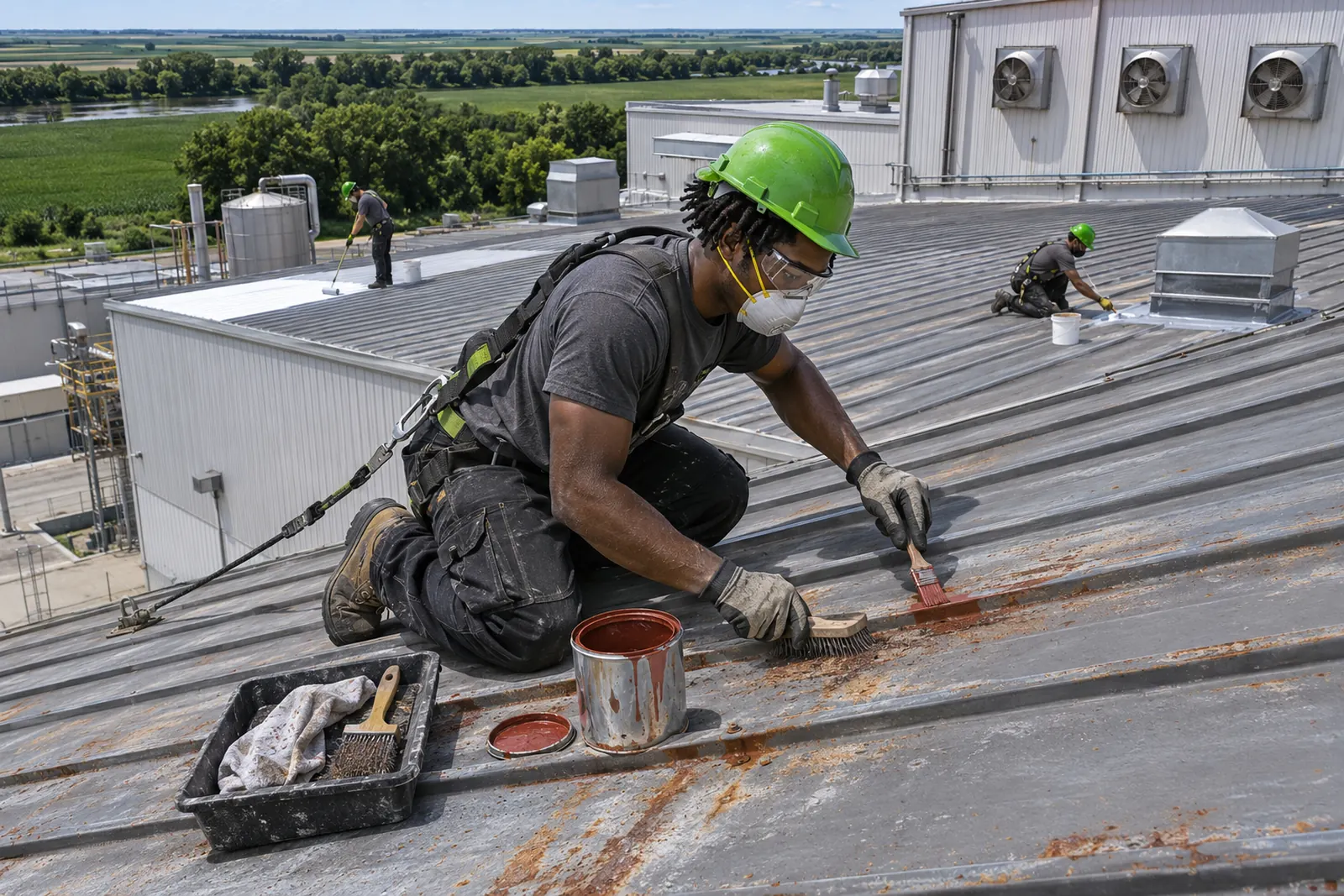
Washing removes chalk and dirt. Rust spots get a rust-inhibiting primer, and painted panels get the primer the acrylic maker lists.
Screws are tightened or replaced and sealed, and laps get polyester fabric set in a base coat of acrylic.
Two or more acrylic coats go on until the roof reaches its specified thickness, checked with a wet film gauge.
Related Services
Acrylic covers the draining parts of a building. These systems handle the rest.
Seals and coats the whole panel field, with the coating chosen to match how the roof drains.
Commercial Metal Roof Coating in Kearney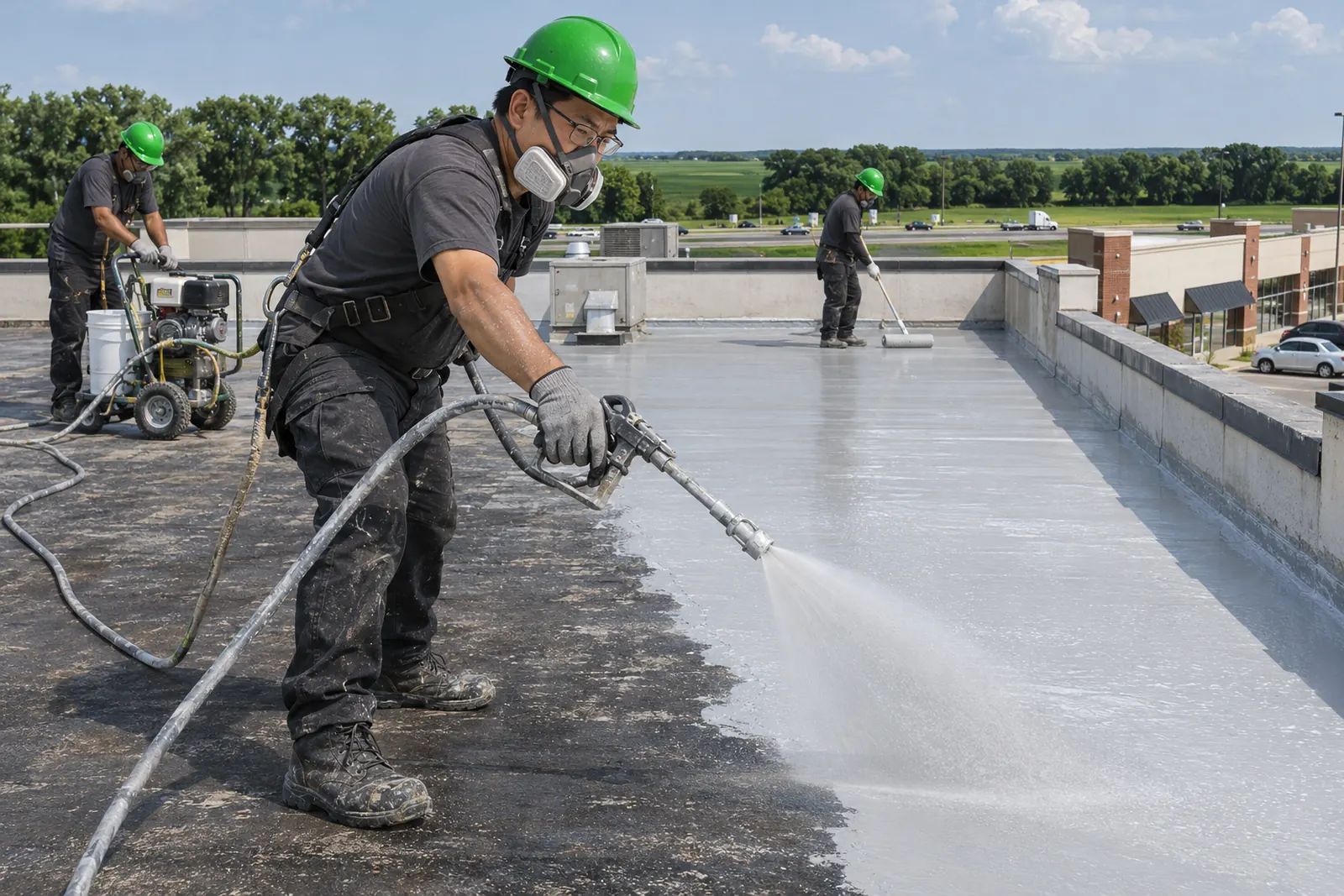
Takes over in box gutters and flat spots where acrylic would soften under water.
Silicone Roof Coating in Kearney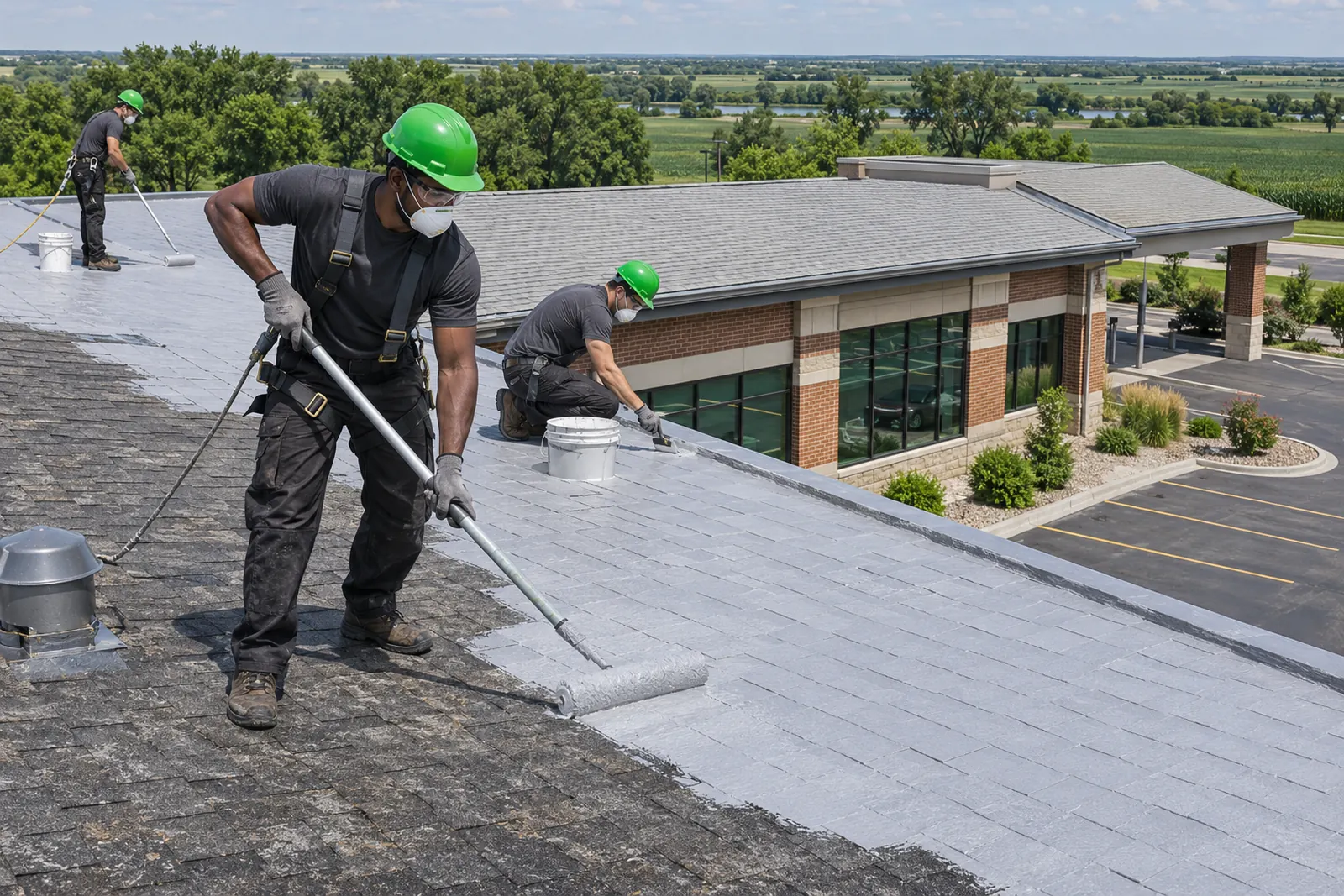
Covers pitched shingle sections on offices and retail buildings next to metal additions.
Shingle Roof Coating in KearneyQuestions
Answers about acrylic on sloped metal roofs, from price to weather to recoats.
Acrylic jobs fall inside the general coating range of about $2.50 to $4 per square foot. The material often costs less per gallon than silicone, though acrylic can take an extra coat to reach thickness. Rust and fastener prep, roof height, and total area move the final number more than the coating choice.
It does on roofs that shed water well, such as pitched panels with no ponding. Acrylic is water-based, grips primed metal, and leaves a bright reflective finish. Because it has to cure before rain or a freeze, we schedule it for the warmer, drier months and keep it out of low spots where water stands.
Standing water and cold weather are the two limits. Acrylic softens where water ponds, and it has to go on in dry conditions above the temperature on the product sheet, which narrows the spring and fall windows. It also wears thinner over the years and takes more coats than silicone to reach the same thickness.
Manufacturers commonly rate acrylic systems for about 10 to 15 years at the specified thickness. On a Kearney building, film thickness and drainage matter most, while standing water, hail, and skipped upkeep shorten that. Because acrylic recoats with acrylic after cleaning, the roof's life can be extended again without a tear-off.
Most acrylic systems on metal take two coats or more. Each coat goes on thinner than silicone, and the count is set by the dry thickness the maker specifies. Seams, screws, and rusted areas get extra build, and a wet film gauge reading on each pass tells us when a section has enough.
Next Step
Get a planning range online, or call to talk about how the roof drains and when it can be coated.