Ponding Water Areas

Kearney Silicone Roof Coating Contractor

Silicone Roof Coating That Protects Low Spots Where Water Sits

As a Kearney silicone roof coating contractor, we spray silicone over metal, single-ply, and foam roofs where water stands after rain or snowmelt.

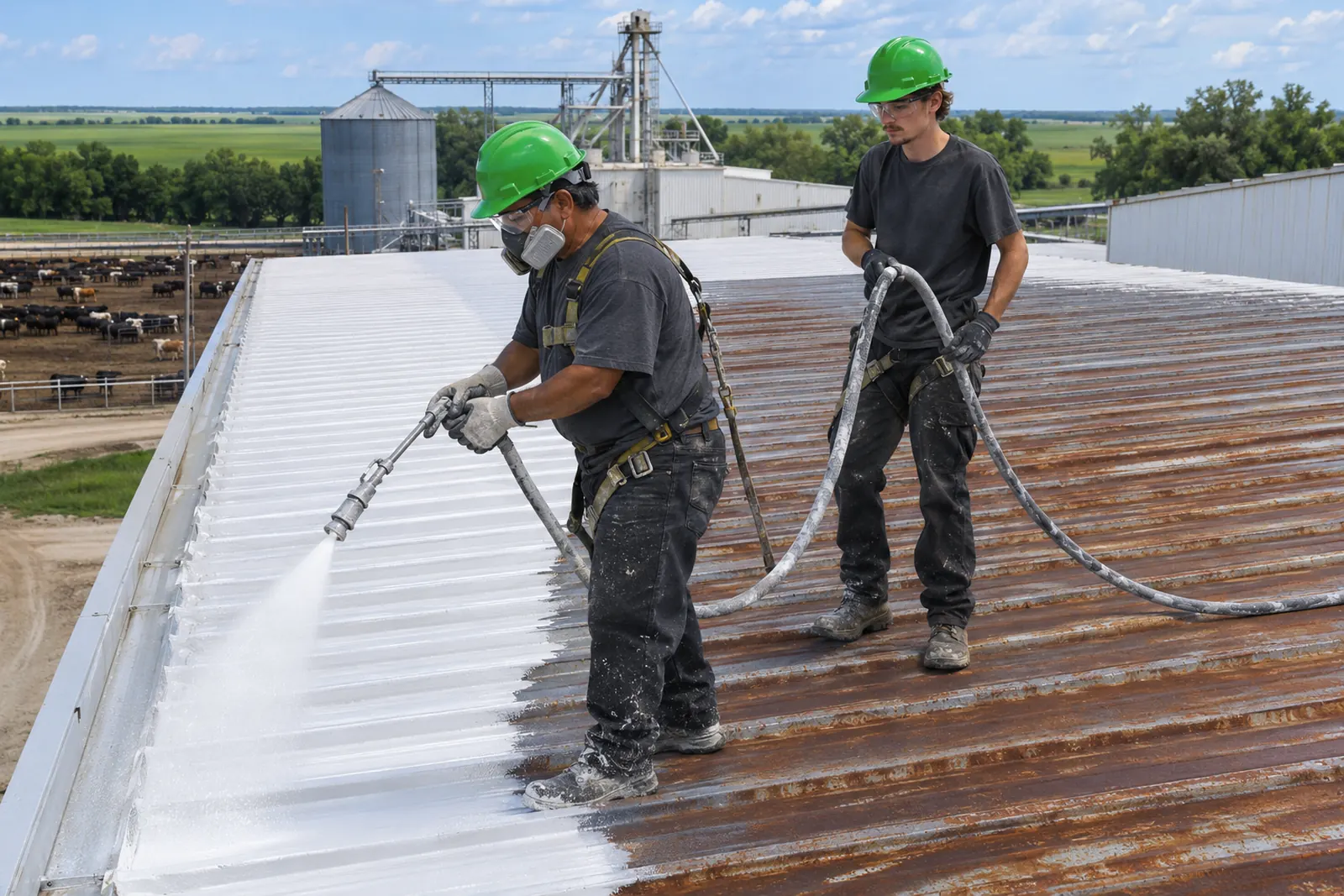
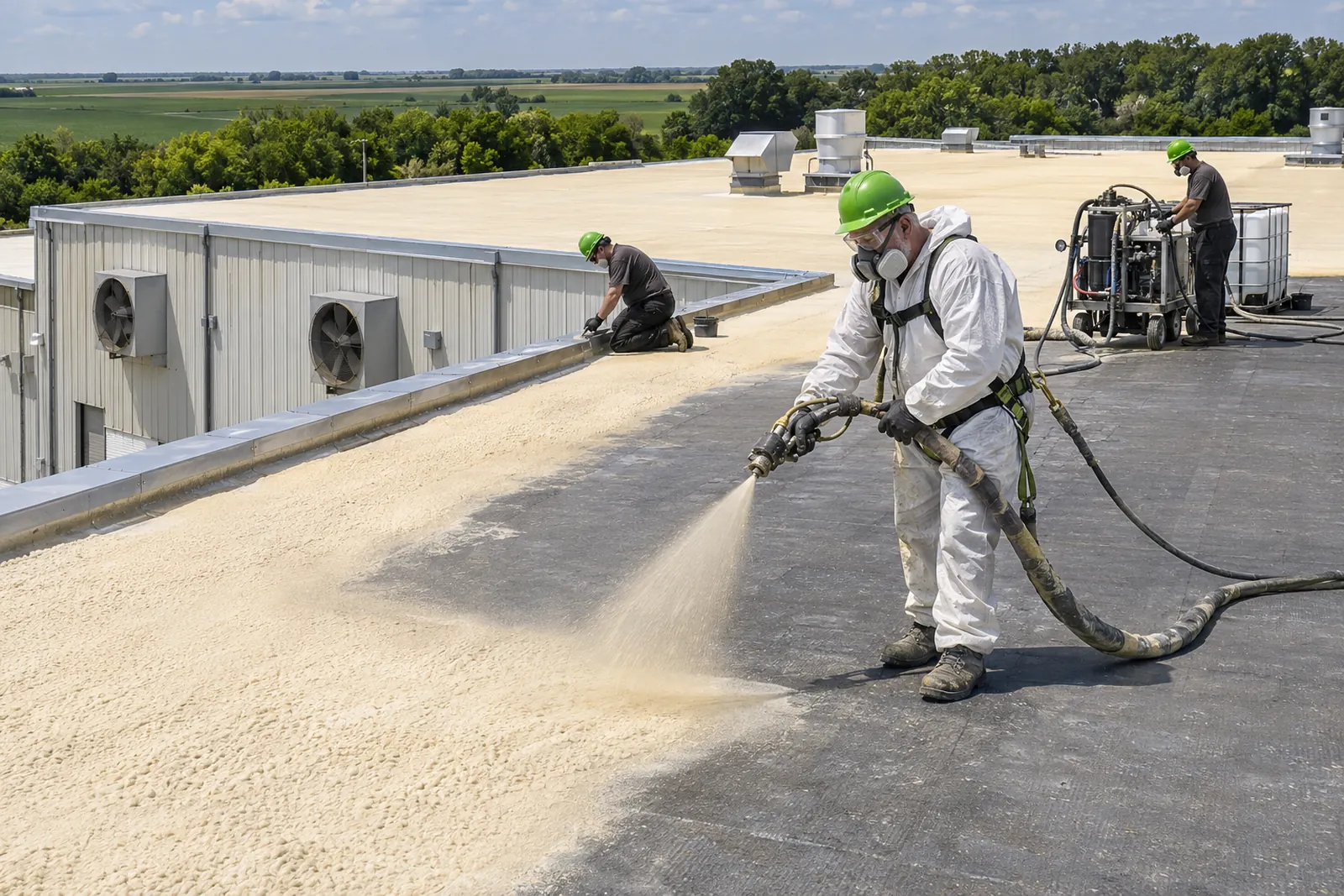
Crew spraying silicone roof coating over a low-slope commercial roof
  • Built for ponding water areas

  • Wet film checked while spraying

  • One or two coats to spec

  • Stays flexible through cold winters

Fit Check

Is Silicone Roof Coating Right for This Kearney Roof?

Kearney silicone roof coating earns its place where water stands for days. Compare a silicone roof with an acrylic one before choosing.

Ponding Areas

Silicone

Standing Water
Keeps its bond where water sits for days
Recoat Later
Silicone only, after cleaning
Dirt Pickup
Holds dust, so it dulls faster near grain
Cold Weather
Handles cooler spray days on a dry surface
Walking Surface
Slick when wet around equipment
Sloped Panels

Acrylic

Standing Water
Softens under ponding
Recoat Later
Acrylic over acrylic after cleaning
Dirt Pickup
Stays brighter in dusty areas
Cold Weather
Needs warm, dry days to cure
Walking Surface
Less slick for rooftop service crews

Roof Conditions

Silicone Roof Coating Problems We Fix in Kearney

Silicone earns its keep on the parts of a roof that hold water. These are the trouble spots we coat with it most.

  1. Low Gutter Runs

    Box gutters and valley gutters between building sections fill and stay full after storms. Silicone keeps sealing even while water sits on it.

  2. Ponding Rings

    Dark rings on a flat section mark where water stands after every rain. Other coatings soften in those rings, while silicone holds its bond.

  3. Membrane Seams

    Older single-ply roofs on the flat parts of a building open at the seams. Silicone with fabric covers those laps in one continuous sheet.

  4. Worn Foam Topcoats

    Spray foam roofs with chalky or thin topcoats get a silicone recoat that blocks sunlight before the foam starts to break down.

  5. Drain and Curb Edges

    Water backs up around roof drains and curbs on low slopes. Silicone gets extra thickness there to handle the longest wet spells.

Coating Options

Commercial Roof Coating Options for Kearney

Silicone goes over three kinds of commercial roof around Kearney. Each one gets its own primer and seam detail.

Metal Roofs

Silicone Over Primed Metal

Sloped metal panels with low gutter runs get silicone after the fasteners are sealed and the rust is primed. Painted panels get a bleed-blocking primer when the product calls for it.

Single-Ply Roofs

Silicone Over Single-Ply

Aged single-ply membranes that still lie flat get washed, primed, and coated, with fabric at every seam and flashing edge.

Foam Roofs

Silicone Over Spray Foam

Foam roofs whose foam is still firm get silicone as the new protective layer once damaged spots are cut out and filled.

Benefits

Benefits of Coating Your Roof

Silicone suits Kearney roofs that hold water after storms and need a coating that stays put.

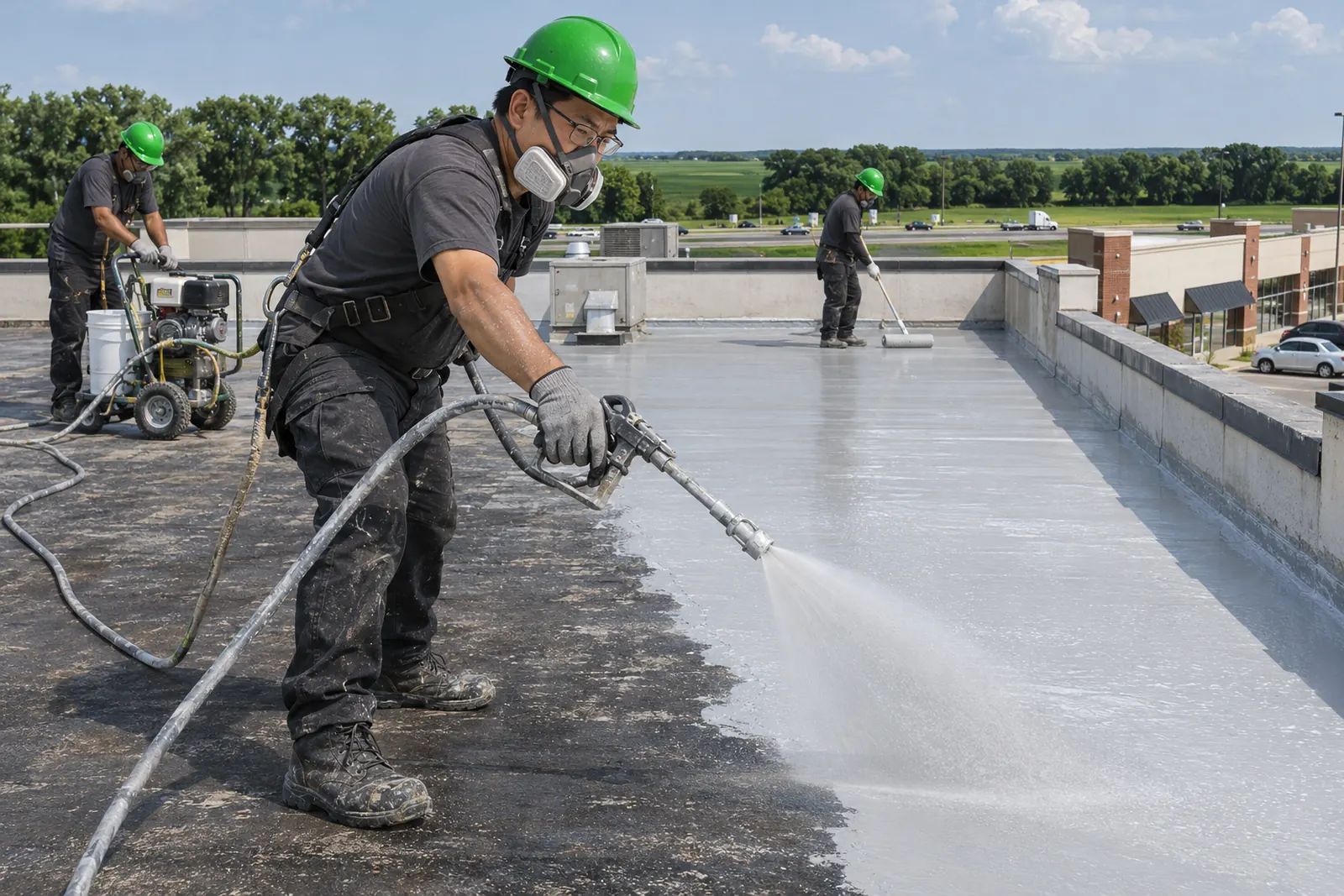
Roofing crew spraying coating across a metal roof on a commercial building near Kearney, NE

Standing Water Stops Being a Problem

Silicone keeps its bond while water sits on it, so the low spots that ruined earlier coatings stay sealed. That matters on Kearney roofs where snowmelt pools for days in late winter.

  • Gutter runs and valleys stay sealed
  • Fewer coats to reach the target thickness
  • Flexible through hot and cold swings

Flexible in Winter

Silicone stays soft enough to move with steel panels as temperatures swing between hot afternoons and freezing nights.

Holds Up to Sun

Sunlight breaks down many roof surfaces over time, yet silicone keeps its body under years of summer sun on open Nebraska roofs.

Cooler Spray Days

Spray dates can run into cooler weather than acrylic allows, as long as the roof surface is dry.

Water Still Standing Two Days After Rain?

Call and describe where the water sits and how long it stays. Ponding areas are where silicone earns its place.

Process

Kearney Silicone Roof Coating, Step by Step

Silicone jobs start like any coating, then add the checks that matter for this chemistry.

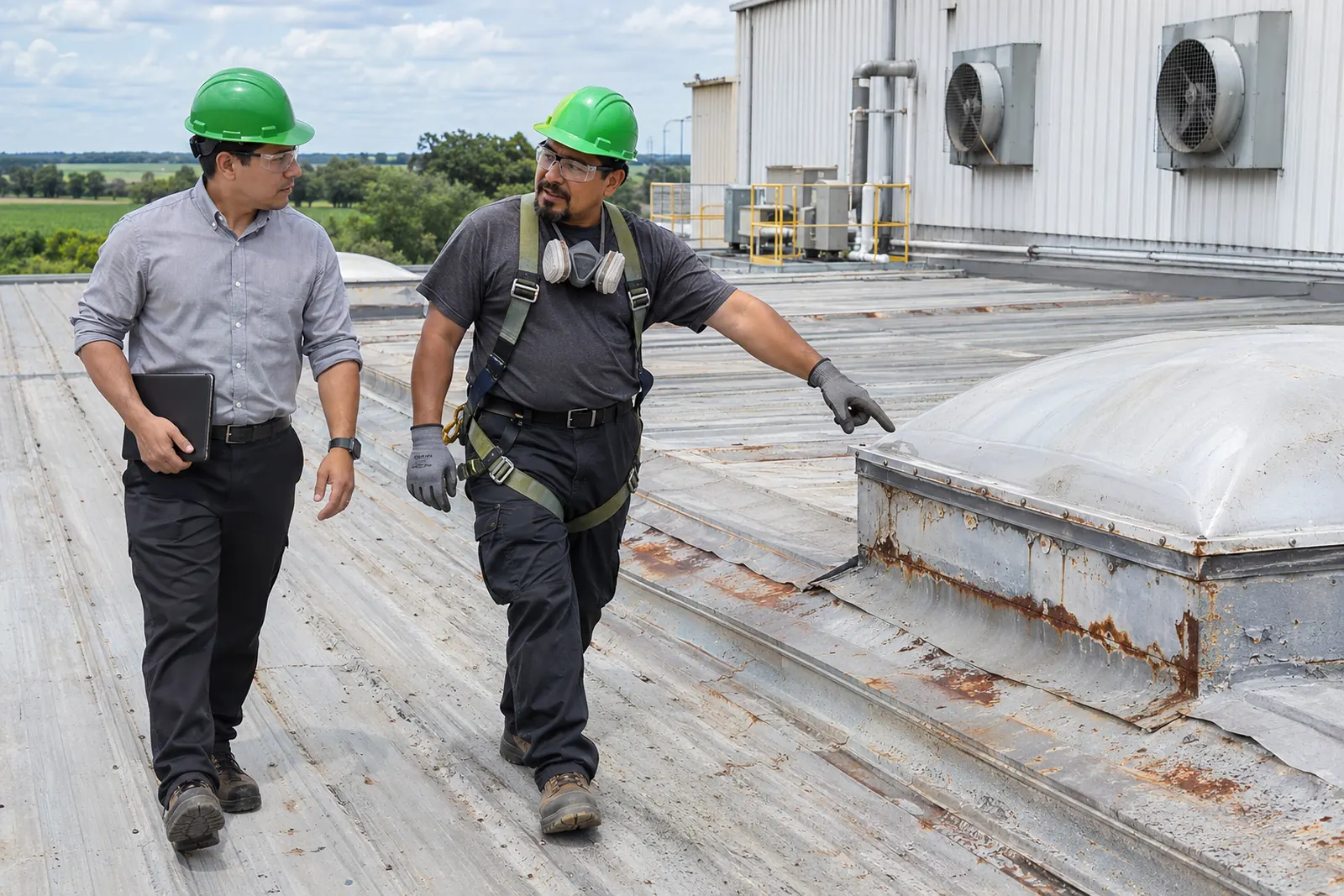
Roofer walking a commercial metal roof with a building owner during an inspection
  1. Inspect Your Roof

    Walking the roof after rain shows exactly where water sits. We probe those areas for wet insulation and test how the existing surface takes primer.

  2. Clean and Dry the Surface

    Dirt, chalk, and grain dust come off with a pressure washer. Silicone only bonds to clean, dry material, so drying time is never cut short.

  3. Prime Where Needed

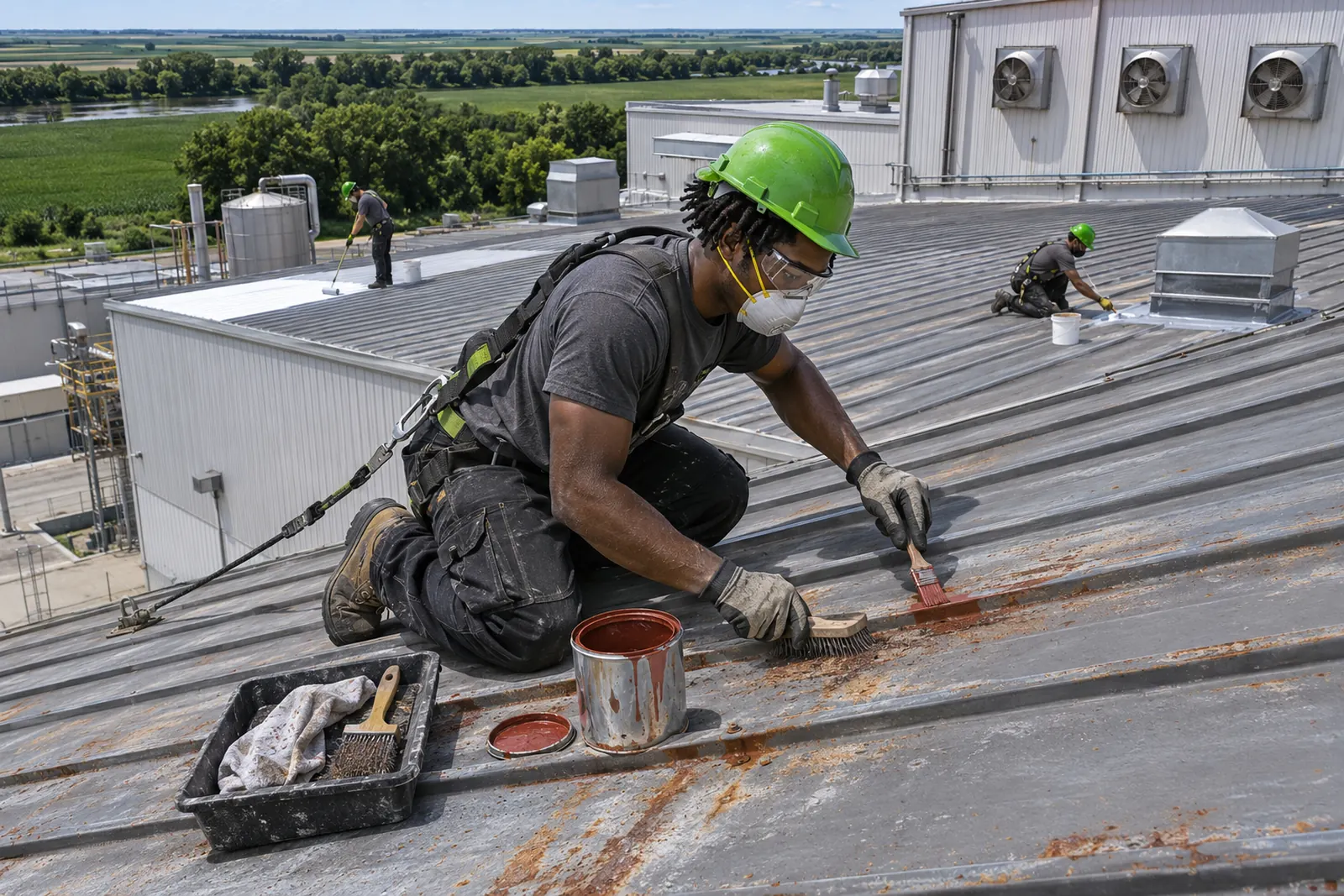
    Rusted metal gets a rust-inhibiting primer, and painted or aged surfaces get the primer the silicone maker lists for them.

  4. Reinforce Seams and Drains

    Laps, seams, and drain edges get fabric bedded in silicone. Those spots carry the most movement and the most water.

  5. Spray to Thickness

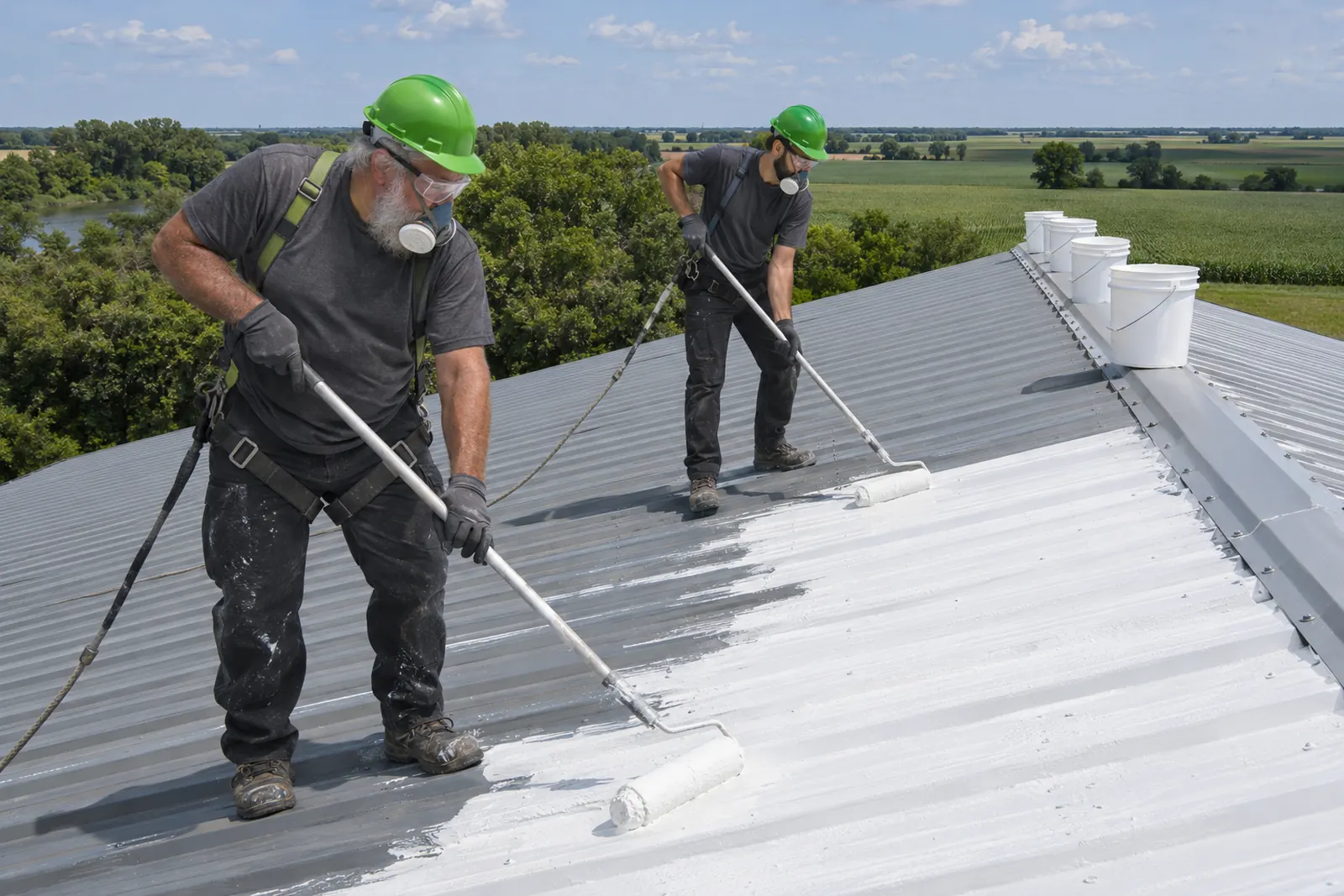
    Silicone goes on in one or two coats sized to reach the specified dry mils, with a wet film gauge reading on each section.

Related Services

Coating Systems That Pair With Silicone in Kearney

Silicone often handles only part of a roof. These systems cover the rest of the building.

Questions

Silicone Roof Coating Questions From Kearney Owners

What owners ask about silicone on metal, single-ply, and foam roofs around Kearney.

  1. What is the silicone roof coating cost on a Kearney building?

    Silicone jobs plan within the general coating range of about $2.50 to $4 per square foot. Silicone costs more per gallon than acrylic, but it often reaches the target thickness in fewer coats. Rust work, fastener repairs, seam fabric, roof height, and total area move the final price more than the choice of silicone does.

  2. Does silicone roof coating hold up on Kearney metal buildings?

    Yes, especially where water collects, because silicone keeps its bond under standing water and stays flexible through cold winters and hot summers. It needs clean, dry panels and the primer the maker specifies. Near grain handling it picks up dust and loses some brightness faster, which a periodic rinse helps.

  3. What are the downsides of silicone roof coating on a Kearney commercial roof?

    Two stand out: recoats and dirt. Most other coatings will not stick to cured silicone, so every future recoat has to be silicone as well. It also holds dust and turns slippery when wet, which matters for anyone servicing rooftop units. Material costs more per gallon than acrylic.

  4. How many coats of silicone roof coating does a Kearney metal roof need?

    Usually one or two. The number is set by the dry thickness the manufacturer specifies, often around 20 to 30 dry mils on the field with extra build at seams and screws. Rough or rusted panels soak up more material, so we read wet film thickness with a gauge as we spray.

  5. How long does silicone roof coating last on a Kearney roof?

    Manufacturers commonly rate silicone systems for 10 to 20 years at their specified mils, and many allow a recoat at the end of that term. Actual life on a Kearney roof comes down to thickness, prep, and use. Hail hits, foot traffic near equipment, and missed seams shorten it, while a thicker application adds years.

Next Step

Hire a Kearney Silicone Roof Coating Contractor

Get a planning range for the roof online, or call to walk through where water sits on it.

Call Us (402) 407-8671