Commercial Metal Roofs

Kearney Metal Roof Coating Contractor

Metal Roof Coating That Seals Fastener Rows, End Laps, and Gutters

As a Kearney metal roof coating contractor, we clean, repair, and coat exposed-fastener and standing-seam metal roofs on shops, warehouses, and plants in and around Kearney.

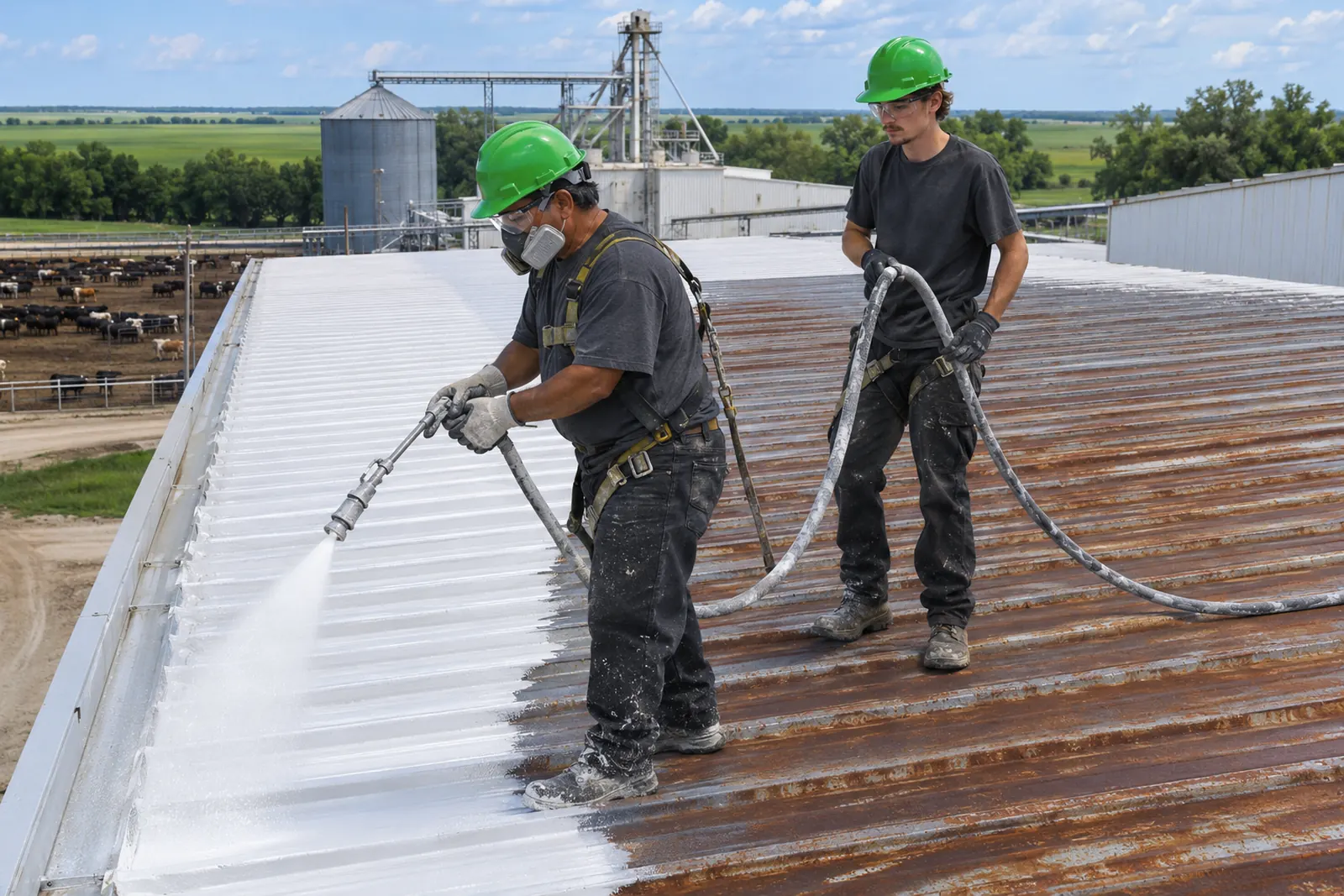
Roofing crew spraying coating across a metal roof on a commercial building near Kearney, NE
  • Moisture check before any coating

  • Fasteners and laps sealed first

  • Mils measured during application

  • Buildings stay open during work

Coat Or Replace

Kearney Metal Roof Coating or a New Roof?

Kearney metal roof coating fits steel that still holds a screw. Replacement fits panels with rust holes or a soaked deck. Here is how the two compare on one roof.

Restore

Coat The Roof

Panel Condition
Solid steel with surface rust and worn fasteners
Leak Source
Seams, end laps, screw holes, and curb flashing
Insulation
Dry when the roof is probed
Building Use
Stays open while crews work on the roof surface
Planning Range
About $2.50 to $4 per sq ft
Tear Off

Replace The Roof

Panel Condition
Rust holes through the steel, crushed or buckled panels
Leak Source
Water coming through the panel field itself
Insulation
Soaked across large areas of the roof
Building Use
Roof sections stay open during the tear-off
Planning Range
About $5 to $8 per sq ft

Work Sequence

How Metal Roof Coating Work Runs in Kearney

Six steps take a leaking metal roof to a coated one, and the building below keeps working the whole time.

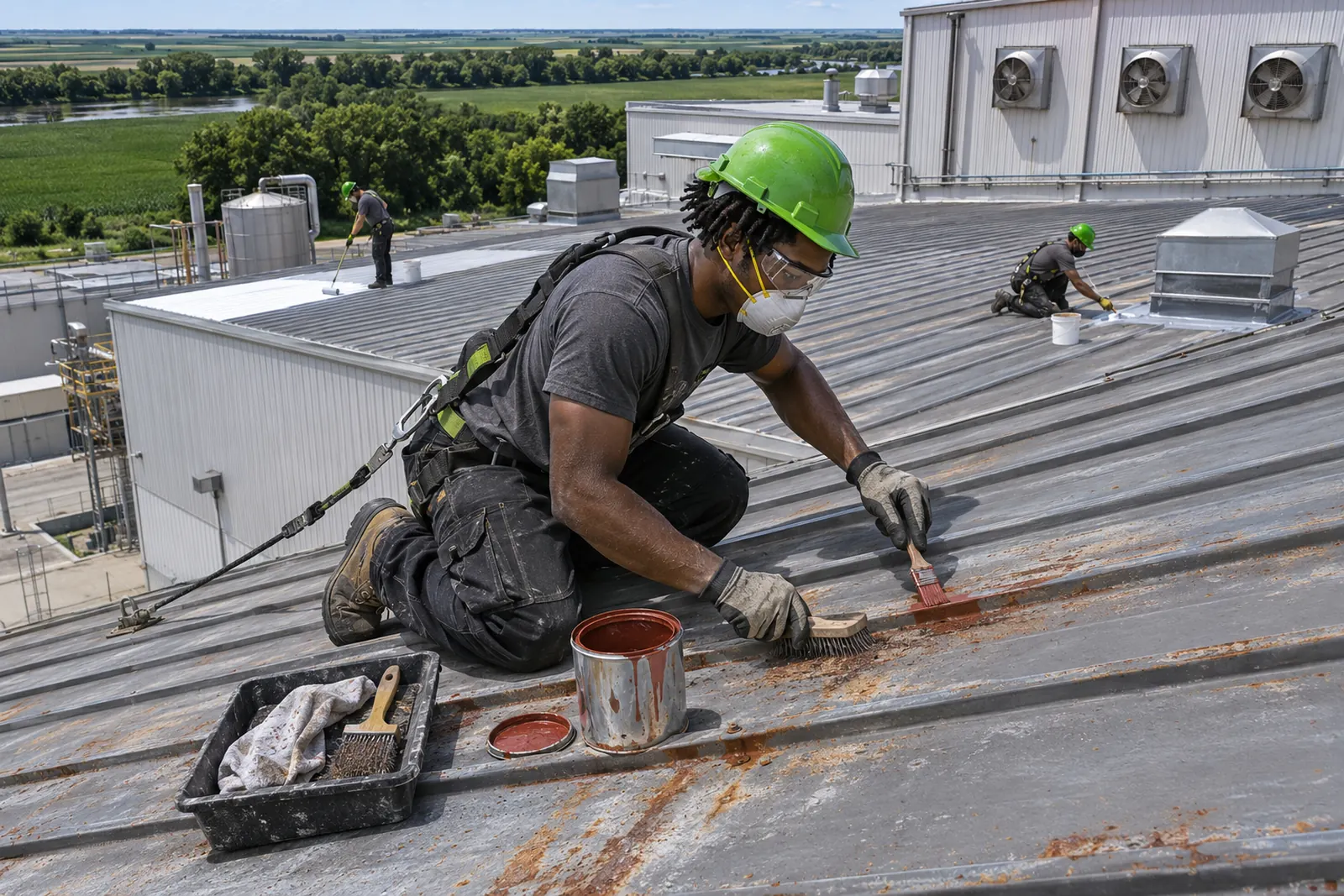
Roofer sealing seams and priming rust on metal roof panels before coating
  1. Inspect Your Roof

    Walking every panel run, we probe for wet insulation, count backed-out screws, and mark rust that has thinned the steel. You see which sections qualify for coating and which need new panels first.

  2. Wash and Dry the Panels

    Pressure washing strips chalk, dirt, and grain dust so the primer can grip bare paint and galvanizing. Panels then dry fully, which often takes most of a spring day.

  3. Treat Rust and Prime

    Loose scale comes off with wire brushes or a grinder. A rust-inhibiting primer goes on wherever the coating maker calls for one, including cut edges at the eaves.

  4. Seal Fasteners and Laps

    Every screw gets tightened or swapped for an oversized fastener, then capped. Side laps and end laps get fabric or seam tape set in base coat.

  5. Apply the Coats

    Base and top coats go on by spray or roller at the specified thickness. A wet film gauge checks mils as each section is finished.

  6. Walk the Finished Roof

    Before the crew leaves, a final walk checks each seam, fastener row, gutter, and curb, and any thin spot gets a touch-up coat.

Coating Systems

Metal Roof Coating Systems Compared for Kearney Buildings

Each system fits a different roof. The table lines them up by the panel or surface underneath, how they handle standing water, and how they get recoated later.

SystemBest SubstratePonding ToleranceTypical UseRecoat Path
Commercial Metal Roof CoatingExposed-fastener and standing-seam steel panelsBest on sloped panels that drainShops, warehouses, and millsRecoat with the same chemistry
Silicone Roof CoatingMetal, single-ply, and foam surfacesHandles water that sits in low spotsLow-slope sections and gutters that hold waterSilicone over silicone only
Acrylic Roof CoatingPrimed metal on sloped panelsSoftens under standing waterWell-drained metal buildingsClean and recoat with acrylic
Spray Foam RoofingMetal and built-up roofs that need insulationFoam can be shaped to drainBuildings that need added R-valueNew topcoat over the foam
Shingle Roof CoatingAsphalt shingles lying flat over a firm deckSteep slopes shed water fastOffices, clinics, churches, and retailTouch-up coats on worn spots

Water Coming Through the Panel Laps?

Call and tell us where the drip shows up inside. We can walk you through what to check on the roof before an inspection.

Why Coat

Metal Roof Coating for Kearney Feed Mills and Shops

Coating keeps the existing steel panels in service and seals the details that leak first.

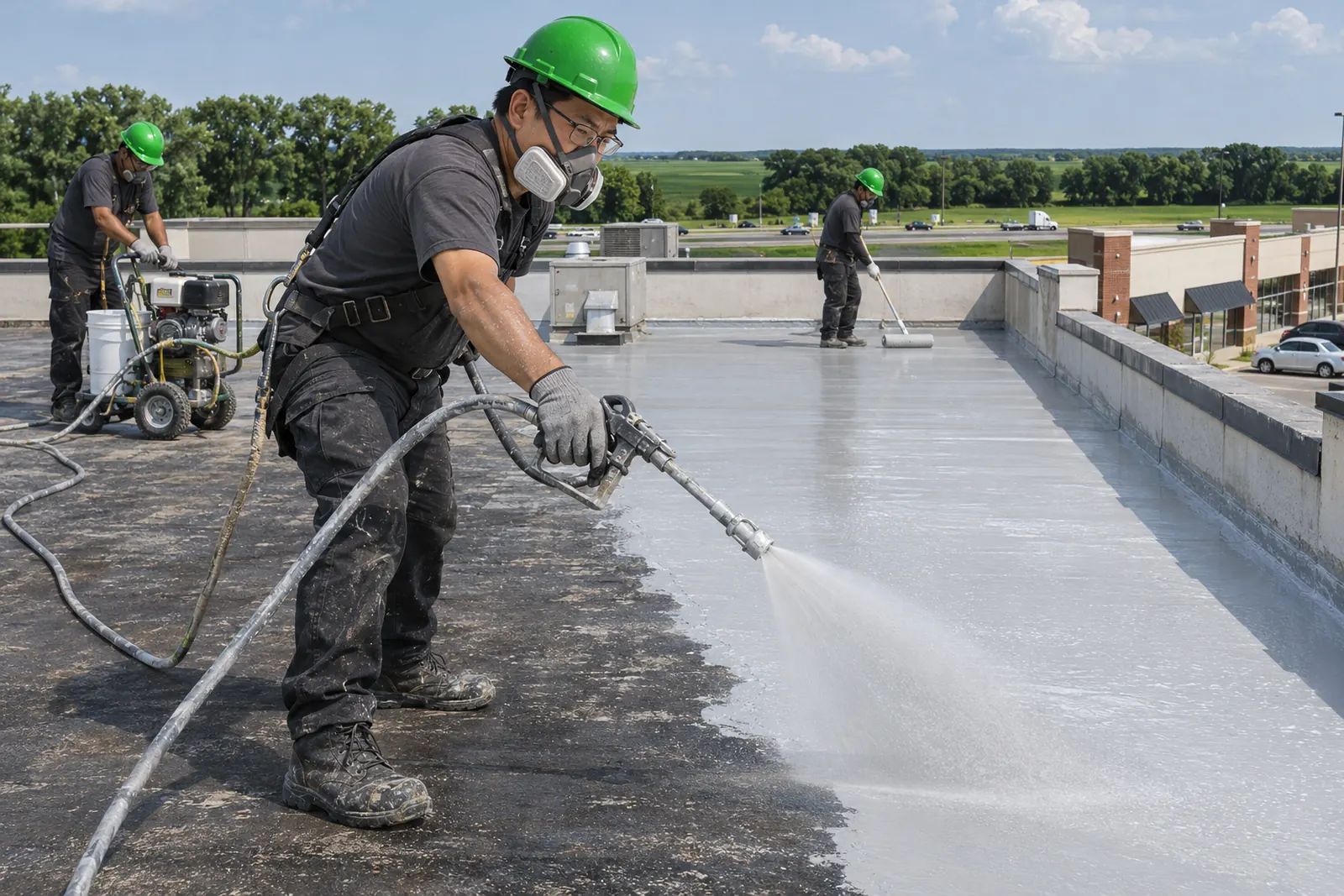
Crew spraying silicone roof coating over a low-slope commercial roof

The Building Stays Covered and Running

Coating goes on over the panels you already have, so the roof is never open to weather. Mills, shops, and warehouses keep loading and storing while work moves across the roof one section at a time.

  • Tear-off debris stays out of the yard
  • Insulation under the panels stays in place
  • Sections are scheduled around loading doors

A Brighter Roof Surface

White and light coatings reflect more summer sun than weathered galvanized steel, which keeps panel temperatures down over offices and storage rooms.

Fewer Leak Points

Sealed screw heads and reinforced laps close the openings where most metal roofs start leaking, across the whole roof at once.

A Recoat Path Later

Once the coating wears, the roof gets cleaned and recoated instead of torn off, provided it was kept at its specified thickness.

Roof Zones

Where Kearney Metal Roofs Start to Leak

Leaks on a metal roof rarely start in the middle of a panel. These five zones are where an inspection looks first.

  1. Eaves and Gutters

    Gutters packed with leaves and grain dust keep the panel ends wet. Rust starts at the cut edge of the bottom panel and climbs the lap toward the first fastener row.

  2. Panel Field and Laps

    Side laps open as panels expand on hot afternoons and shrink on cold nights. End laps pull apart once the sealant strip dries out and cracks.

  3. Fastener Rows

    Screws back out over the years, and the rubber washers under their heads harden and split. Each one becomes a small hole that drips during heavy rain.

  4. Curbs and Penetrations

    Exhaust fans, rooftop units, and pipe boots sit in flashing that was caulked once and left alone. Hail and foot traffic crack that caulk first.

  5. Ridge and Trim

    Ridge caps and rake trim catch wind-driven rain. Loose closures and missing screws along the ridge let snowmelt drip onto stored goods below.

Service Area

Towns We Cover From Kearney

Shops, implement buildings, and storage buildings in these towns are where we coat metal roofs most. Outside them? Call us or send us a message.

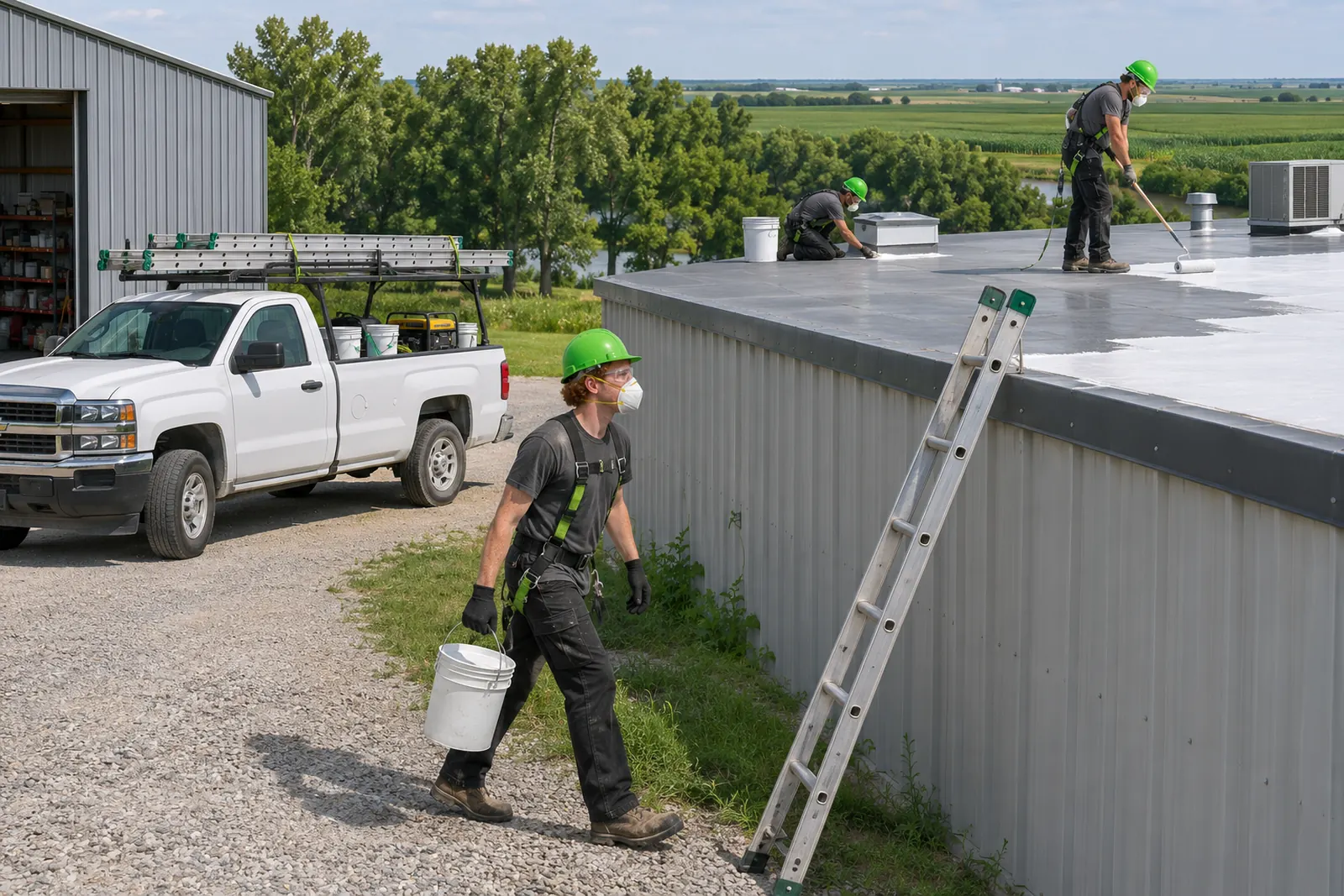
Plain work truck parked beside a commercial building before a roof coating job

Holdrege

Holdrege jobs often cover a storefront roof, a back warehouse, and a canopy, so each section is measured and priced on its own.

  • Retail fronts with metal additions behind them
  • Each roof section measured separately
  • Laps where old and new panels meet
Holdrege metal roof coating
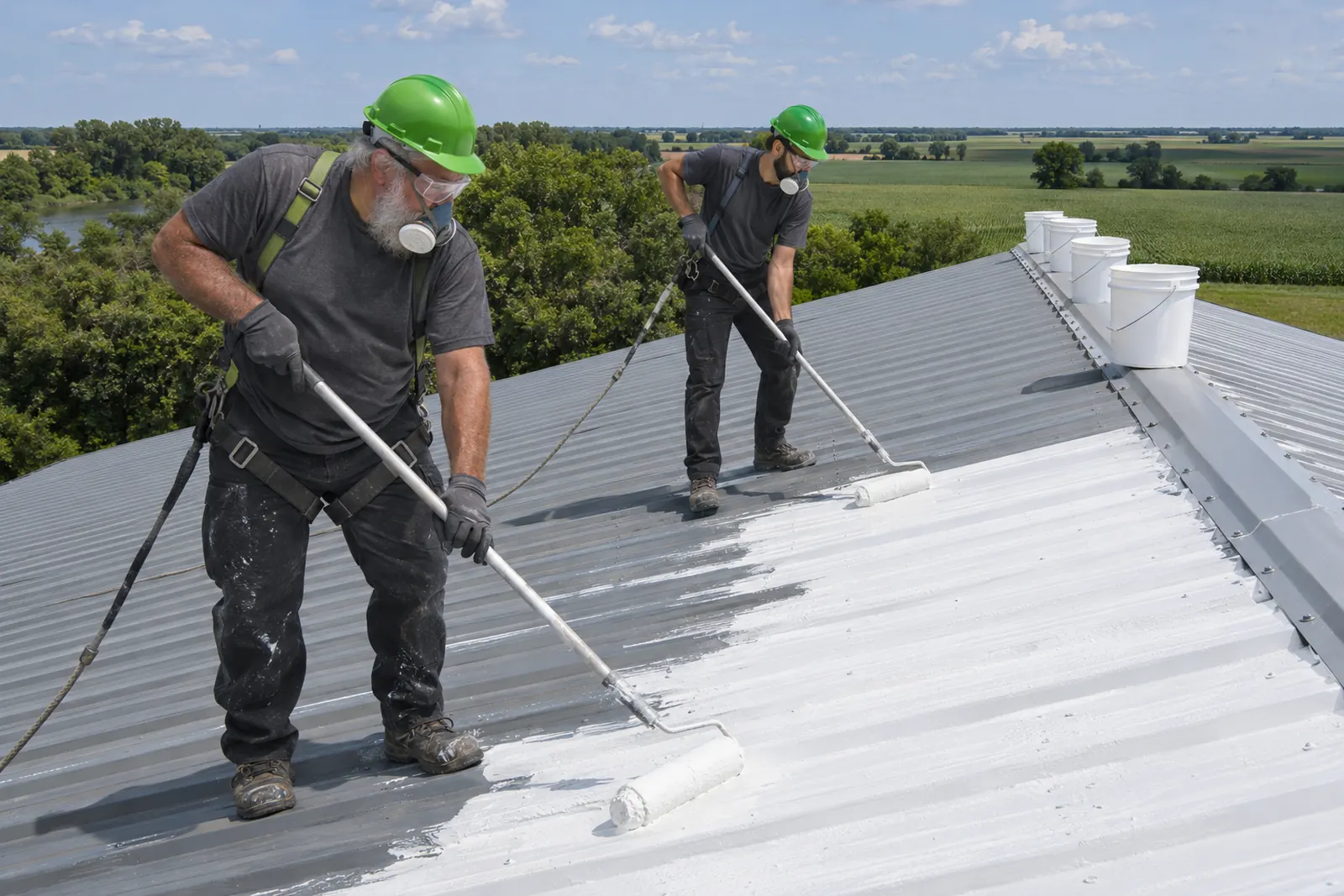
Roofer rolling acrylic roof coating onto metal roof panels

Minden

Minden implement and storage buildings with exposed screws usually leak at the fasteners and end laps long before the panels give out.

  • Backed-out screws on long panel runs
  • Implement and equipment storage roofs
  • Rust along the bottom panel edges
Minden metal roof coating
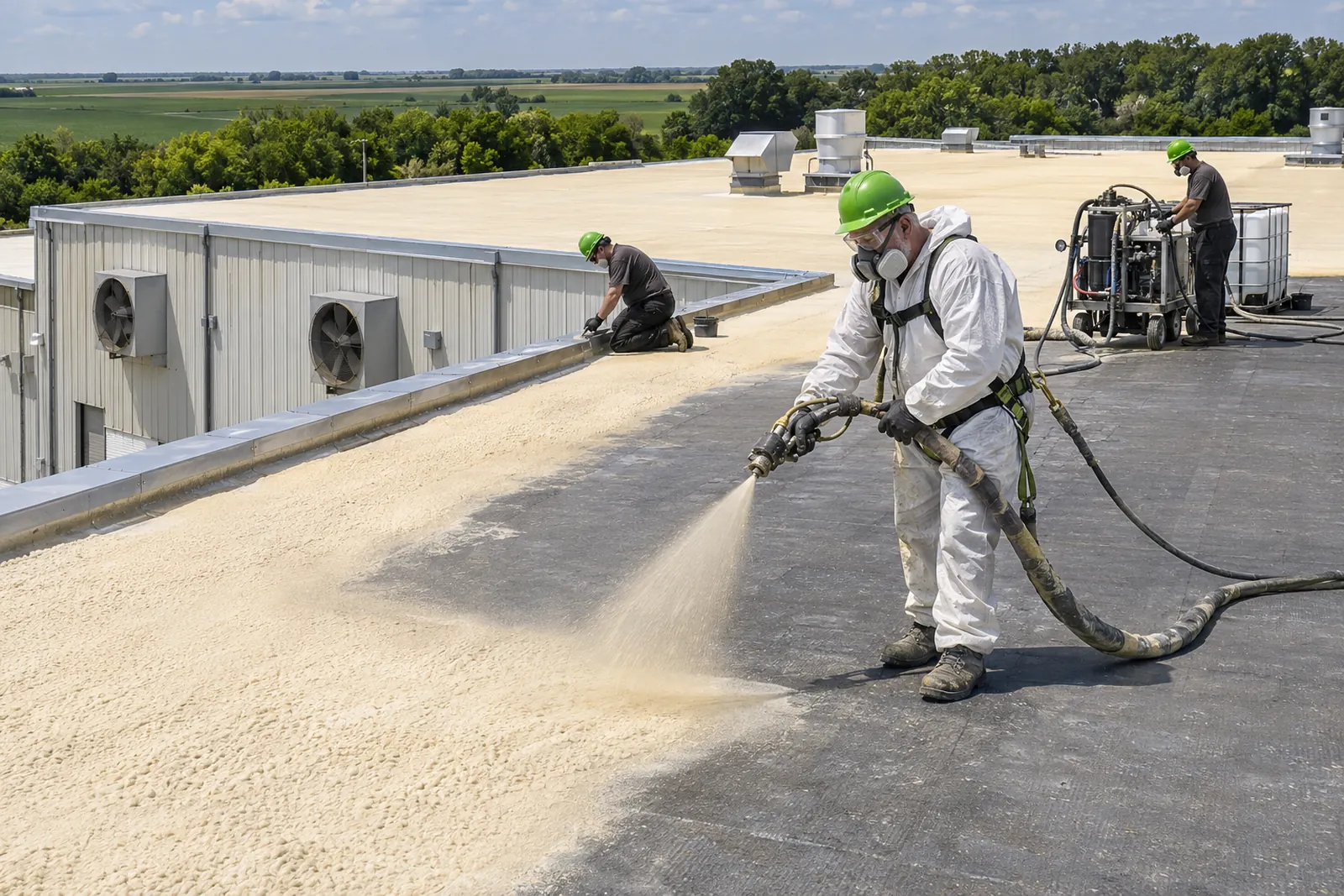
Crew applying spray foam roofing to a commercial roof

Gibbon

In Gibbon we stage wash days and spray days around loading doors and parking so the business keeps running below.

  • Loading doors kept clear on spray days
  • Rooftop intakes closed when a primer calls for it
  • Overspray kept off vehicles and equipment
Gibbon metal roof coating
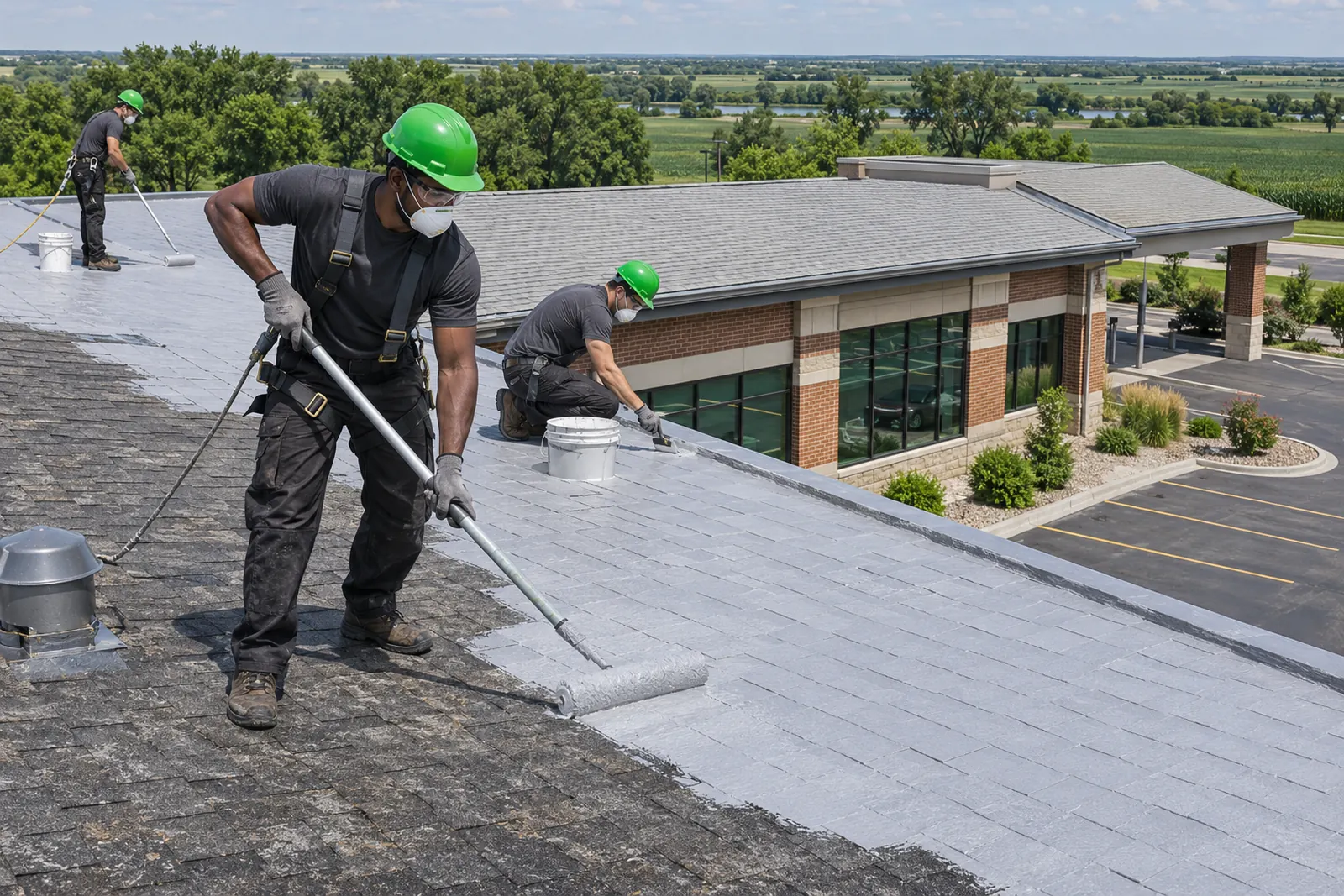
Crew coating an asphalt shingle roof section on a commercial building

Ravenna

Ravenna roofs near grain handling collect dust that has to come off before any primer can grip the panels.

  • Grain dust washed off before priming
  • Drip spots noted inside the building
  • Adhesion tested on a small area first
Ravenna metal roof coating
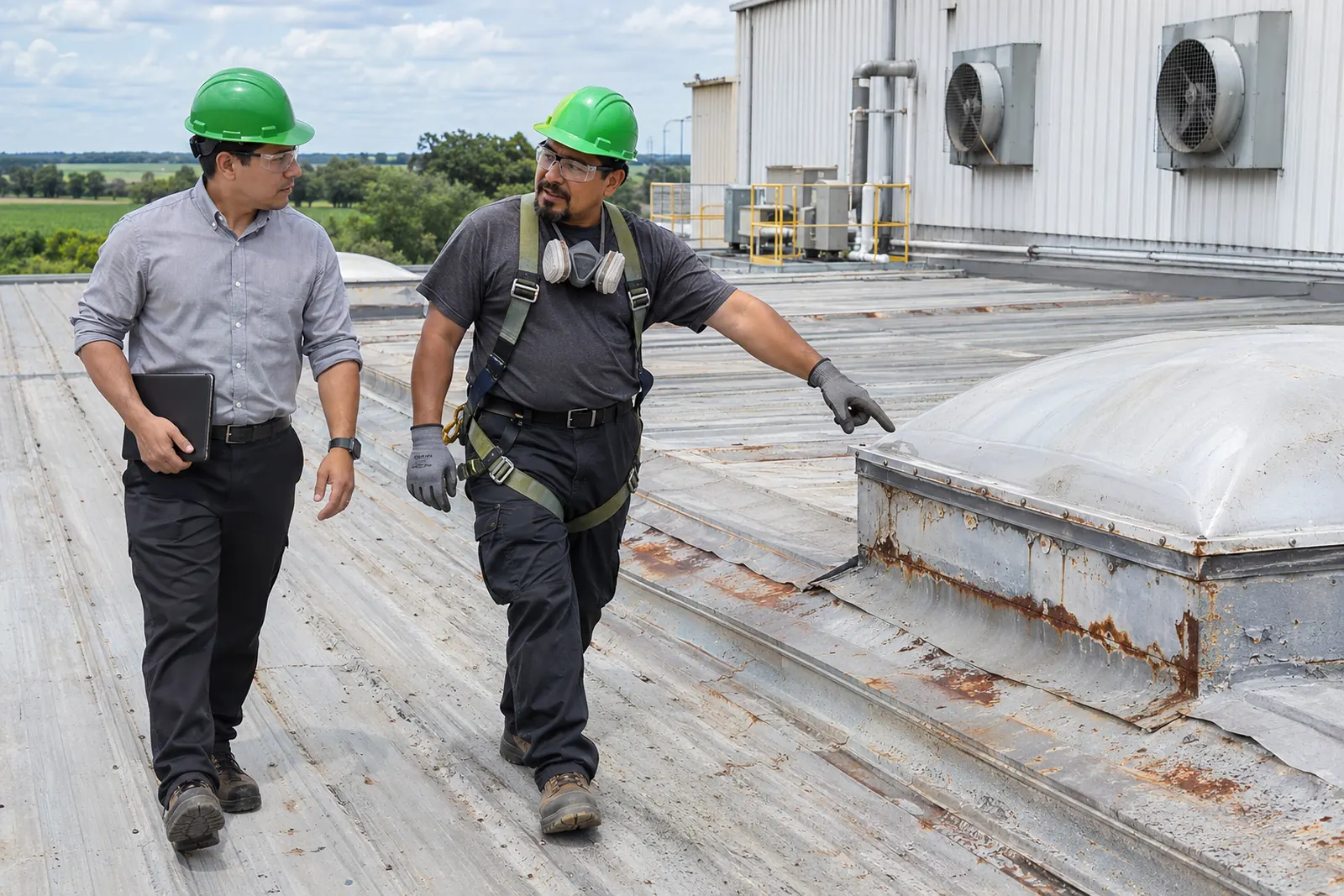
Roofer walking a commercial metal roof with a building owner during an inspection

Shelton

After a hail storm, Shelton roofs get a walk that checks dented panels, cracked fastener caps, and bruised coating.

  • Dents and fastener caps checked after hail
  • Freeze-thaw wear at seams and screws
  • Coats applied at measured thickness
Shelton metal roof coating

Owner Questions

Metal Roof Coating Questions From Kearney Owners

Short answers to what owners ask before they schedule a coating. The full list is on our FAQ page.

  1. How long does a metal roof coating last on a Kearney commercial building?

    Service life comes down to film thickness, prep, and upkeep. Coating makers commonly rate their metal roof systems for roughly 10 to 20 years at the specified mils. On Kearney roofs, thin spots at gutters, hail strikes, and foot traffic around rooftop units wear a coating fastest, so a yearly walk with quick touch-ups adds the most years.

  2. Is metal roof coating or replacement the better fit for a Kearney metal building?

    Coating wins when the steel is still solid and the leaks trace back to screws, laps, and flashing. Replacement makes more sense once panels have rusted through, the deck sags, or probes find soaked insulation over large areas. We check fasteners and probe the roof before recommending either one.

  3. Is roof coating worth it on a Kearney metal warehouse or shop building?

    For a warehouse or shop that leaks at seams and screws, it usually is, because one coating system closes those openings and adds a reflective surface. It stops making sense once rust has eaten holes through panels or the framing is damaged. An inspection sorts the roof into areas that qualify and areas that need panel work.

  4. What time of year suits metal roof coating in Kearney?

    Late spring through early fall works best around Kearney, when panels stay dry and air temperatures stay above what the product sheet requires during cure. Acrylic needs the warmest, driest stretch. Silicone handles cooler days but still needs dry steel, so morning dew pushes start times later in spring and fall.

  5. How much does a coated metal roof cost in Kearney?

    Plan on about $2.50 to $4 per square foot for coating, compared with about $5 to $8 for a full replacement. Where a roof lands comes down to its size, rust depth, how many seams and screws need work, lift access, the number of coats, and any wet insulation to cut out.

Next Step

Hire a Kearney Metal Roof Coating Contractor

Enter your roof size for a planning range, or call to talk through what you see on your roof.

Call Us (402) 407-8671